The living room is the primary representation of your home’s aesthetic, serving as both a high-visibility showpiece and a functional daily gathering spot. Choosing the “best” flooring here involves weighing factors like comfort, maintenance, and durability against your unique lifestyle. While aesthetics are important, the right choice ultimately supports the long-term enjoyment and value of your home.
Greater Boston Contractors breaks down the top flooring choices for the modern American living room, helping you select a surface that performs as beautifully as it looks.
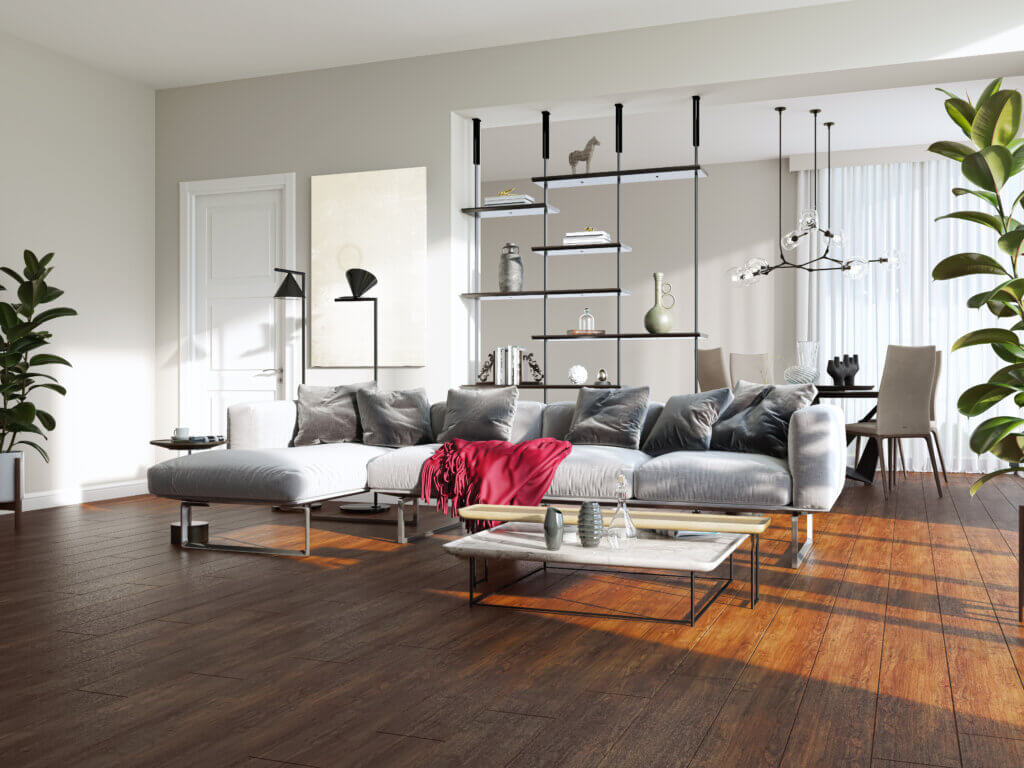
Living Room Flooring Priorities
Unlike kitchens or bathrooms where moisture resistance is key, the living room prioritizes different characteristics.
Comfort Underfoot
As a space designed for relaxation, the floor should feel good underfoot.
- Warmth: Materials like traditional hardwood and carpet offer inherent insulation and warmth. Harder, denser materials like ceramic tile or concrete require radiant heating or large area rugs to feel comfortable in cooler climates.
- Acoustics: Softer materials (carpet, cork) absorb sound, creating a quiet, intimate atmosphere, which is vital in homes with high ceilings or open floor plans. Hard materials amplify sound, increasing echo.
Aesthetics and Home Style
The floor sets the tone for the entire interior design.
- Traditional/Transitional: Hardwood (oak, maple, cherry) remains the classic choice, offering timeless appeal.
- Modern/Contemporary: Wide plank engineered wood, sleek polished concrete, or large-format tile (often used in conjunction with expansive glass walls or minimalist decor).
- Versatility: Luxury Vinyl Plank (LVP) is a popular choice for transitional styles, as it mimics natural materials but allows for easy color matching across different design themes.
Maintenance Level
Consider the time and effort required for daily and annual cleaning.
- Low Maintenance: LVP and large-format tile are easy to sweep and mop, requiring minimal specialized care.
- Medium Maintenance: Hardwood requires regular sweeping and occasional refinishing (every 7–10 years for solid wood) to maintain its finish and appearance.
- High Maintenance: Full-room carpet requires frequent vacuuming and deep cleaning to prevent dirt buildup and allergens.
Best Flooring Options for Living Rooms
Each material offers a unique balance of durability and design for this central space.
Hardwood and Engineered Wood
- Pros: Unmatched warmth, excellent sound dampening (when compared to tile), and significant resale value. Solid hardwood can be sanded and refinished multiple times. Engineered wood is more stable in humidity changes.
- Cons: Susceptible to scratching, denting (especially softer woods like pine or cherry), and fading in direct sunlight. Higher initial cost than most alternatives.
Luxury Vinyl Plank (LVP)
- Pros: Highly scratch-resistant, 100% waterproof, and extremely budget-friendly compared to wood. Installation is typically faster and less complex (DIY-friendly click-lock systems are common).
- Cons: Does not offer the same high-end feel as natural wood. Cannot be sanded or refinished; if damaged, the plank must be replaced.
Tile with Rugs
- Pros: Unbeatable durability, completely stain-proof, and can be used with radiant heat for luxury comfort. Large-format porcelain tiles offer a sophisticated, seamless look.
- Cons: Cold underfoot, hard and unforgiving if items are dropped, and grout lines require more involved cleaning.
Check it out: Living Room Floor Ideas to Elevate Your Space
Carpet in Low-Traffic Households
- Pros: The quietest, warmest, and softest option underfoot. Lowest initial cost among the options.
- Cons: Absorbs stains and odors, traps allergens, and has the shortest lifespan (often needing replacement every 8–10 years). Best reserved for formal, low-traffic areas.
Flooring Choice by Household Type
The right material can withstand the specific demands of your family’s daily life.
Homes with Pets
Prioritize durability and water resistance.
- Recommendation: Luxury Vinyl Plank (LVP) is the undisputed winner. Its robust wear layer resists claw scratches, and its waterproof core shrugs off accidents.
- Avoid: Soft woods (pine, cherry) and carpet, which easily trap pet hair and stains.
Homes with Children
Focus on ease of maintenance and resistance to impact.
- Recommendation: Engineered Wood with a durable finish (for aesthetics) or LVP (for maximum stain protection). Both can handle spills and heavy toy play.
- Consider: If a softer fall surface is needed, a large, thick area rug can be placed over a durable hard floor.
Open Floor Plans
Emphasize visual consistency and flow.
- Recommendation: A single flooring material used throughout the entire main level (kitchen, living room, hallways). Wide plank engineered wood or LVP creates the most cohesive, expansive look, minimizing visual clutter where rooms transition.
- Avoid: Sudden shifts in flooring type, which can make the open space feel choppy and smaller.
Cost vs. Longevity
Evaluating flooring should involve calculating the long-term value, not just the initial price tag.
Upfront Cost vs. Lifetime Value
- LVP: Low upfront cost, high value (due to durability and long lifespan).
- Hardwood: High upfront cost, but extremely high lifetime value (can be refinished multiple times, effectively renewing the floor).
- Carpet: Lowest upfront cost, but lowest lifetime value due to short lifespan and cleaning costs.
Impact on Resale
In the U.S. market, hardwood and engineered wood floors continue to provide the highest return on investment and are a major selling point for prospective buyers. LVP is increasingly viewed as a high-quality, practical alternative, but hardwood still carries the premium aesthetic.
FAQs
Is hardwood always best for living rooms?
Hardwood is considered the best for maximum resale value and aesthetic appeal, but it is not always best for lifestyle. If your priority is scratch resistance, waterproofing, and low maintenance (due to pets, high traffic, or budget constraints), Luxury Vinyl Plank is often the more practical and stress-free “best” choice.
What flooring is quietest?
Carpet is the quietest due to its excellent sound absorption qualities. Among hard floors, engineered wood or thick LVP (especially when installed over a sound-ddampening underlayment) is quieter than tile or concrete.
Can you mix living room flooring with kitchen flooring?
Yes, you can, but it should be done intentionally. For practical reasons, many homeowners switch from wood/LVP in the living room to tile in the kitchen due to the high risk of water and spills. To maintain flow, ensure the color tone (warm or cool) and overall darkness of the two materials are complementary. Avoid abrupt or complex patterns at the transition point.
Ready to find the perfect flooring solution that fits your budget and lifestyle?
Check it out: How to remodel a living room step-by-step