The living room is the heart of home life—a multifunctional space used for relaxation, entertainment, and gathering. The flooring you choose for this area must balance aesthetic appeal, durability, and comfort. Unlike high-moisture zones (like bathrooms) or high-impact zones (like garages), living room flooring decisions are heavily influenced by design and lifestyle.
Greater Boston Contractors helps you navigate the best options, focusing on materials that not only look stunning but also enhance the functionality and longevity of your main living space.
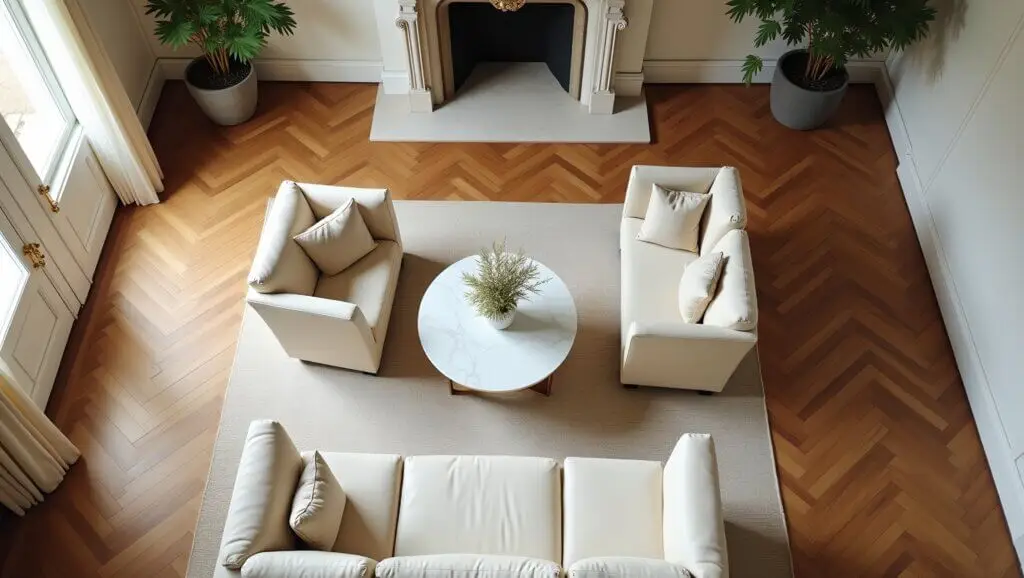
What to Consider When Choosing Living Room Flooring
Before falling in love with a color or material, evaluate how your family uses the living room and how the space connects to the rest of your home.
Comfort and Warmth
The living room is a relaxation zone, making comfort a high priority.
- Insulation: Hard surfaces (like tile or concrete) can feel cold underfoot. If you live in a colder climate, consider materials with natural thermal properties (like wood or cork) or plan for area rugs to introduce warmth.
- Noise: Harder floors amplify noise. If you have high ceilings or an open floor plan, consider materials that absorb sound better (like carpet or area rugs) to reduce echo.
Foot Traffic and Durability
While living rooms typically see less wear than kitchens or entryways, they still need to withstand daily life.
- Pets and Kids: If you have pets or active children, prioritize scratch-resistance. Engineered hardwood with a durable wear layer or Luxury Vinyl Plank (LVP) are excellent choices over softer solid woods.
- Sunlight Exposure: If the room receives heavy direct sunlight, choose materials that resist fading (like certain tiles or concrete) or engineered floors with UV protection. Solid wood can fade or change color unevenly over time.
Connection to Adjacent Rooms
Flooring continuity is a powerful design tool, especially in open-concept layouts.
- Flow: For open floor plans, using the same flooring material throughout the main level (kitchen, living room, dining room) creates a seamless visual flow, making the entire space feel larger and more cohesive.
- Transition: If switching materials (e.g., from tile in the kitchen to wood in the living room), ensure the colors or tones harmonize. Use a subtle threshold or transition strip to mark the change cleanly.
Popular Living Room Flooring Ideas
Modern residential construction offers several high-performance options beyond traditional carpet.
Hardwood and Engineered Wood Floors
- Hardwood (Solid or Engineered): Remains the gold standard for its timeless beauty and warmth. Engineered wood is generally preferred in modern homes because its layered construction makes it more dimensionally stable and less prone to warping due to environmental changes.
- Aesthetic: Adds significant resale value and unmatched natural character.
Luxury Vinyl Plank (LVP) for Modern Homes
- LVP/LVT (Luxury Vinyl Tile): A composite material that mimics the look of natural wood or stone with astonishing realism.
- Benefits: 100% waterproof, highly scratch-resistant, durable, and affordable. It is a fantastic choice for homes with pets or in areas prone to moisture (e.g., near large sliding doors).
Tile Floors for Contemporary or Open Layouts
- Porcelain or Ceramic Tile: Ideal for contemporary or Mediterranean-style homes. Tile is extremely durable, resists fading, and is easy to clean.
- Use Case: Tile works best in open concepts where the living room is integrated with a tiled kitchen, or if the homeowner plans to install radiant floor heating beneath the surface.
Carpet or Area Rugs for Comfort Zones
- Full Carpet: Provides the ultimate acoustic insulation and warmth. It is best suited for formal living rooms or dedicated media rooms where foot traffic is low.
- Area Rugs: An essential element for defining seating areas on hard surfaces. Rugs add texture, color, and comfort without sacrificing the durability of the underlying hard floor.
Color & Layout Design Tips
The direction, width, and color of your flooring material fundamentally alter the perception of space.
Light vs. Dark Floors
- Light Colors (e.g., light maple, gray vinyl): Reflect natural light, helping the room feel more open, airy, and contemporary. They tend to show less dust but more dirt and tracking.
- Dark Colors (e.g., dark walnut, espresso stain): Add drama, sophistication, and contrast. They can make a large room feel cozier but tend to show dust, pet hair, and surface scratches more easily.
Wide Plank vs. Narrow Plank
- Wide Plank (6 inches or more): The current popular trend. It creates a cleaner, more spacious, and modern look, with fewer seams visually cluttering the floor.
- Narrow Plank (3 inches or less): Creates a more traditional, busy, or classic look.
Direction of Installation and Natural Light
Always install planks in the direction that runs parallel to the longest wall or follows the main line of natural light entering the room. This draws the eye lengthwise, making the room look longer, and prevents the sun from catching seams and highlighting imperfections.
Mixing Flooring With Area Rugs
Area rugs are not just decoration; they are functional design tools for the living room.
Defining Seating Zones
In an open-concept space, a large area rug clearly delineates the living area from the dining area or kitchen.
- Sizing Rule: The rug should be large enough so that at least the front two legs of all main seating pieces (sofas, armchairs) sit comfortably on it. If the rug is too small, it makes the entire seating area look disjointed.
Layering Texture Without Visual Clutter
Use the rug to soften the overall aesthetic and introduce texture without busy patterns:
- Neutral Base: If your main floor is highly patterned (e.g., strong oak grain or patterned tile), choose a neutral, solid-colored rug.
- Textural Contrast: If your main floor is a uniform color (e.g., light LVP or painted concrete), use a highly textured rug (like a Berber or shag) to add depth and interest.
FAQs
What flooring makes a living room look bigger?
Light-colored flooring with wide planks and a seamless, uniform finish (like LVP or engineered wood) makes a room look bigger. Installing the planks parallel to the longest wall further enhances the illusion of length and space.
Is tile too cold for a living room?
Tile can feel cold underfoot because it transfers heat rapidly. While highly durable, in colder climates, many homeowners mitigate this by installing radiant floor heating beneath the tile or by using large, thick area rugs to cover the primary seating areas.
Should living room flooring match the hallway?
Yes, for optimal flow and aesthetic coherence, the living room flooring should ideally match the hallway and adjoining areas. Using the same material throughout the main level minimizes visual interruption, simplifies cleaning, and contributes significantly to the perceived value and quality of the home.
Ready to find the perfect durable and beautiful flooring for your main living area?
Contact Greater Boston Contractors today for material sampling, design consultation, and professional installation of all types of residential flooring!