The kitchen is often referred to as the heart of the home, but from a construction standpoint, it is also one of the most demanding environments for building materials. Choosing the right flooring is a critical decision that balances aesthetics with the harsh realities of daily wear and tear. At Greater Boston Contractors, we believe a great kitchen floor should look as good after ten years as it does the day it’s installed.
What Kitchen Flooring Needs to Handle
Before selecting a material, it is important to understand the “environmental stressors” unique to an American kitchen. Unlike a bedroom or home office, the kitchen floor is a workhorse.
Moisture, Spills, and Temperature Changes
Between dishwasher leaks, overflowing sinks, and spilled pasta water, your kitchen floor is constantly under threat from moisture. Furthermore, the kitchen often experiences rapid temperature fluctuations due to ovens, stovetops, and refrigerators, which can cause certain materials to expand or contract.
Heavy Foot Traffic and Dropped Objects
In most U.S. households, the kitchen is the primary thoroughfare. The floor must withstand constant foot traffic, the weight of heavy appliances, and the occasional impact of a dropped cast-iron skillet or glass bottle. A “brittle” floor can crack, while a “soft” floor can dent.
Cleaning and Maintenance Demands
Because the kitchen is a food preparation area, hygiene is paramount. The best flooring options are those that don’t trap allergens or bacteria and can withstand frequent mopping with household cleaners without losing their finish.
Top Kitchen Flooring Options Compared
Porcelain or Ceramic Tile (Durability and Water Resistance)
Tile remains a gold standard in American kitchens for its incredible resilience.
- Pros: It is virtually waterproof and extremely difficult to scratch. Porcelain, specifically, is denser and less porous than ceramic, making it ideal for high-moisture areas.
- Cons: It can be cold and hard on the feet during long periods of standing, and the grout lines require sealing to prevent staining.
Luxury Vinyl Plank (Comfort and Waterproof Options)
Luxury Vinyl Plank (LVP) has skyrocketed in popularity across the U.S. in recent years.
- Pros: High-quality LVP is 100% waterproof. It features a “wear layer” that mimics the look of real wood or stone and offers a slightly softer feel underfoot than tile.
- Cons: While very durable, it doesn’t offer the same long-term resale value as natural stone or real wood.
Engineered Wood (Warm Look with Better Stability)
For homeowners who demand the look of real timber, engineered wood is the preferred choice over solid hardwood for kitchens.
- Pros: It consists of a real wood veneer atop a stable plywood core. This construction makes it less likely to warp or “cup” when exposed to humidity changes.
- Cons: It is more expensive than vinyl and can still be damaged by standing water if a leak isn’t caught quickly.
Laminate (Budget-Friendly with Limitations)
Modern laminate has come a long way, with many brands now offering “water-resistant” lines.
- Pros: It is highly affordable and easy to install. It is also very resistant to scratches from pet claws.
- Cons: If water seeps into the joints, the fiberboard core can swell and delaminate, which is usually a permanent and unfixable issue.
Flooring to Avoid (or Use with Caution)
Solid Hardwood in High-Moisture Kitchens
While beautiful, solid hardwood is prone to significant expansion and contraction. In a room where spills are frequent, solid wood can gap or warp, leading to costly repairs. If you must use it, ensure it has a high-quality polyurethane seal.
Low-Quality Laminate Near Sinks and Dishwashers
Standard, non-water-resistant laminate is a risky choice near water sources. A minor dishwasher leak can ruin an entire floor in a matter of hours as the wood pulp core absorbs the moisture.
Choosing Based on Lifestyle & Budget
Families with Kids or Pets
If you have a busy household with toddlers or large dogs, Luxury Vinyl Plank (LVP) is often the winner. Its scratch resistance and waterproof nature mean you don’t have to panic every time a juice box falls or a dog comes in with muddy paws.
Open-Concept Kitchens
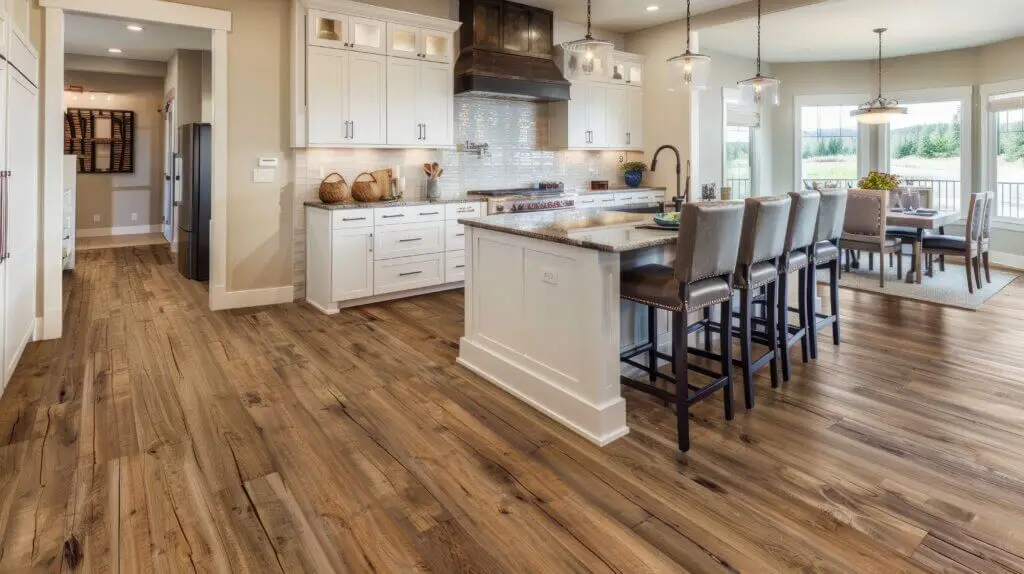
Many modern U.S. homes feature open floor plans where the kitchen flows directly into the living area. In these cases, using the same Engineered Wood throughout both spaces creates a seamless, high-end look that makes the home feel larger.
Check it out: Open Concept Kitchens: Pros, Cons, and Design Ideas That Actually Work
Resale Value Considerations
If you are remodeling with the intent to sell within 5–10 years, Porcelain Tile or High-End Engineered Wood typically provide the best return on investment. Buyers often view these as “permanent” and “premium” upgrades.
FAQs
What kitchen flooring lasts the longest?
Porcelain tile is generally the most durable. When installed correctly, it can easily last 50 years or more, outliving most other components of the kitchen.
Is vinyl flooring good for kitchens?
Yes, specifically Luxury Vinyl Plank (LVP). It is the most practical choice for many homeowners because it combines the look of wood with total waterproof protection.
What’s the easiest kitchen floor to clean?
Large-format porcelain tiles with minimal grout lines or high-quality LVP are the easiest to maintain. They require only basic sweeping and occasional damp mopping.
Ready to Build Your Dream Kitchen?
Selecting the perfect floor is just the first step in a successful kitchen remodel. At Greater Boston Contractors, we specialize in high-quality craftsmanship that stands the test of time. Whether you’re looking for a modern tile layout or the warmth of engineered wood, our team is ready to bring your vision to life.
Click here to request your free estimate and start your kitchen transformation today!
Check it out: What Comes First in a Kitchen Remodel: Floors or Cabinets?