Basement ceiling insulation involves installing thermal or acoustic barriers between the floor joists of your home’s lowest level. While many homeowners initially think of insulation for warmth, in a basement setting, it serves two distinct masters: Thermal Isolation (keeping heat in the living space above) and Acoustic Separation (dampening the sound of daily life).
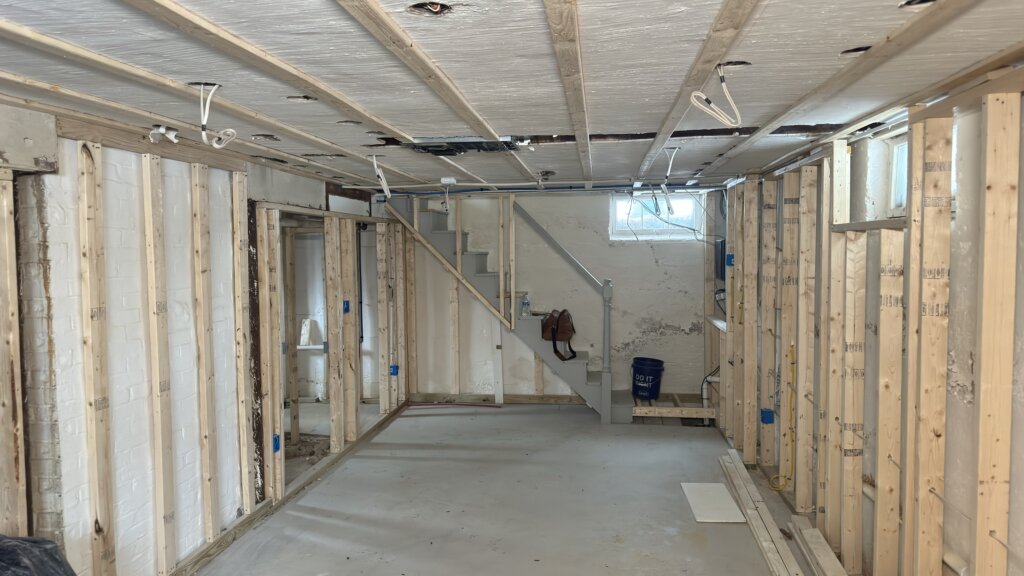
Should You Insulate Basement Ceilings or Walls?
The decision to insulate the ceiling versus the walls depends entirely on how you intend to use the basement.
- Insulate the Ceiling if: Your basement is unconditioned (unfinished and unheated), and you want to keep the floors of your first story warm. It is also the “Masterpiece” solution for soundproofing a finished basement office or media room.
- Insulate the Walls if: You plan to finish the basement or if you have sensitive mechanicals (like a furnace or water heater) down there. Wall insulation brings the basement into the “thermal envelope” of the home, protecting pipes from freezing.
Benefits of Basement Ceiling Insulation
1. Noise Reduction Between Floors
In 2026, with more people working from home, sound control is a priority. Ceiling insulation acts as an acoustic sponge, drastically reducing “airborne noise” (talking, TV) and “impact noise” (footsteps, dropping objects) between the basement and the main floor.
2. Targeted Heat Retention
If your basement is a cold storage area, ceiling insulation prevents your expensive first-floor heat from “sinking” into the basement floor. This keeps your toes warmer in the winter and lowers your heating bills.
3. Better Room Separation
Insulation allows you to maintain different temperatures in different zones. You can keep your upstairs cozy at 70°F while keeping the basement at a cooler 55°F without the two spaces fighting for thermal equilibrium.
Best Materials for Basement Ceiling Insulation
- Mineral Wool (Roxul): The professional’s choice for soundproofing. It is much denser than fiberglass, fire-resistant, and won’t sag over time.
- Fiberglass Batts: The most cost-effective option for thermal protection. In 2026, we use formaldehyde-free versions for better indoor air quality.
- Blown-in Cellulose: Ideal for existing finished ceilings where we can’t easily remove drywall. We can blow this dense material into the cavities to provide a “Masterpiece” sound barrier.
- Spray Foam: Used primarily in the “rim joists” (where the house meets the foundation) to stop air leaks, though it can be applied to the entire ceiling for maximum air sealing.
When Ceiling Insulation Is Not the Best Solution
- Conditioned Basements: If your basement is heated and cooled, insulating the ceiling is unnecessary for heat—you actually want the air to circulate between floors. Use it for sound only.
- HVAC Equipment Exposure: If your furnace and ducts are in the basement, insulating the ceiling can make the basement too cold, potentially causing pipes to freeze in extreme Massachusetts winters.
- Unresolved Moisture: Never install insulation if your basement has active leaks or high humidity. Fiberglass and cellulose can trap moisture, leading to mold growth hidden above your head.
Common Basement Ceiling Insulation Mistakes
- Compressing the Material: Insulation works by trapping air. If you cram a 6-inch batt into a 4-inch space, you lose the R-value and the “Masterpiece” efficiency.
- Blocking Access: Never cover junction boxes, shut-off valves, or cleanouts. A professional installation includes creating “access ports” for future maintenance.
- Ignoring Air Sealing: Putting insulation over an air leak is like wearing a coat but leaving it unzipped. You must seal the gaps around pipes and wires with spray foam first.
Check it out: Drywall basement ceiling: A clean and polished look
FAQs
Is basement ceiling insulation worth it?
If your goal is soundproofing or keeping a cold unfinished basement from chilling your first floor, it is a high-ROI upgrade. If the basement is already finished and heated, the thermal value is minimal.
What type of insulation is best for sound?
Mineral wool is significantly better than fiberglass for sound absorption. For a “Masterpiece” soundproof finish, we often recommend pairing it with resilient channels and specialized drywall.
Does it help with cold floors?
Yes. By creating a thermal break, it prevents the cold basement air from cooling the subfloor of your first story.
Engineer Your Home’s Comfort with Greater Boston Contractors
At Greater Boston Contractors, we treat insulation as a science. We don’t just “install” material; we evaluate your home’s entire thermal envelope to ensure your basement project adds real value to your daily life. From high-end soundproofing for home theaters to energy-efficient rim joist sealing, we bring specialist-level craftsmanship to every Massachusetts home.
- Acoustic Experts: We design multi-layered systems for true silence.
- Thermal Efficiency Specialists: We help you lower your energy bills for the long term.
- Local Code Compliance: Every project meets the latest 2026 safety and fire codes.
Looking to quiet your home or lower your heating costs? Contact Greater Boston Contractors today for a professional basement insulation assessment and estimate!