Transforming your garage into a functional home gym can be one of the best investments you make in your health and your home. Unlike a spare bedroom, a garage is often more suitable for heavy equipment, has concrete floors, and can be customized to your exact needs. This guide covers the key steps and considerations for a successful garage gym conversion.
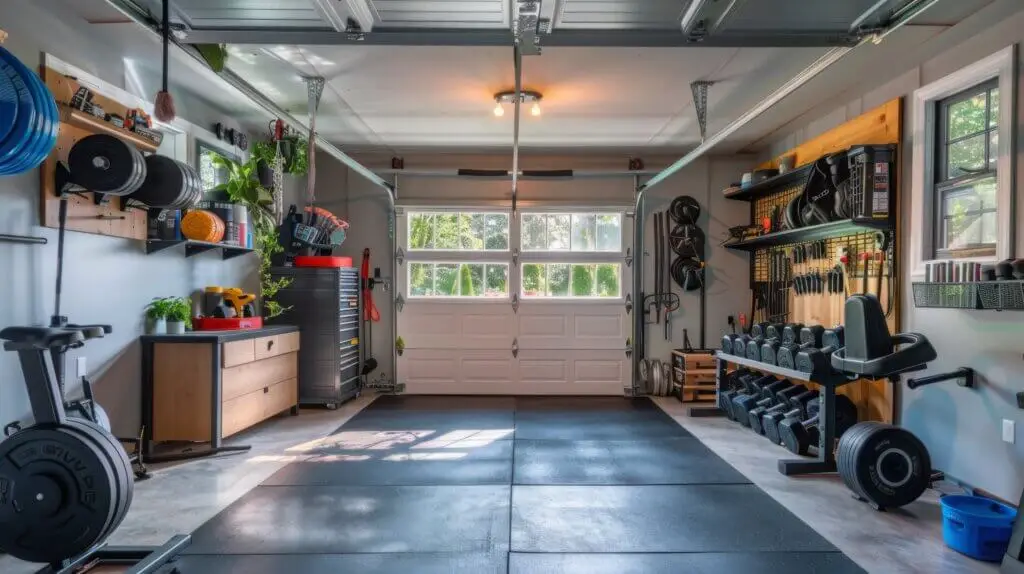
Planning the Layout
Before you buy a single piece of equipment, it’s crucial to plan your space. Think about your workout style and what you’ll need.
Zones for Cardio, Strength, and Mobility
Divide your garage into logical workout zones. A common setup includes:
- Cardio: An area for a treadmill, bike, or elliptical.
- Strength: A dedicated space for a squat rack, bench, and free weights.
- Mobility/Stretching: An open floor area for bodyweight exercises, yoga, and cool-downs.
Measure your space carefully and use masking tape to mark out these zones on the floor. This will help you visualize the flow and ensure you have enough room to move freely and safely.
Ceiling Height and Door Clearance
Pay close attention to your ceiling height. If you plan to do overhead presses, rope climbs, or use a pull-up bar, make sure you have ample vertical space. Also, remember to account for your garage door when it’s open; you need to ensure there is enough clearance to operate the door without hitting your equipment.
Flooring & Sound Control
Your garage floor is likely concrete, which is durable but can be hard on your joints and is very loud when you drop weights.
Rubber Tiles vs. Rolls
The most common and effective flooring for a garage gym is rubber flooring. It protects the subfloor, reduces noise, and provides a safer surface for lifting.
- Rubber Tiles: Interlocking tiles are easy to install yourself and are great for smaller or oddly-shaped spaces. You can replace individual tiles if they get damaged.
- Rubber Rolls: These are more seamless and ideal for covering large, uninterrupted areas. Installation may require more effort, but they provide a professional finish.
Vibration Pads and Subfloor Checks
To further reduce noise and protect your floor from impact, use vibration pads under heavy equipment like a power rack or treadmill. Before installing any flooring, check your concrete slab for cracks or moisture issues. A professional contractor can assess this and recommend a suitable moisture barrier if needed.
Climate & Ventilation
Garages are not typically climate-controlled, making them hot in the summer and cold in the winter.
Insulation and Dehumidification
Proper insulation in the walls, ceiling, and garage door is the most effective way to maintain a comfortable temperature year-round. A contractor can help you choose the right insulation for your climate. In humid areas, a dehumidifier is essential to prevent rust on your equipment and to keep the air from feeling sticky.
Fans, Mini-Splits, and Fresh Air
For air circulation, a large, powerful fan is a simple solution. For more advanced temperature control, consider a ductless mini-split AC unit. This provides both heating and cooling without the need for extensive ductwork. Always ensure you have a way to bring in fresh air, especially if you are using equipment that creates dust.
Electrical & Safety
Safety should always be a priority.
Dedicated Circuits and Outlets
If you’re using electrically-powered equipment like a treadmill or elliptical, ensure you have a dedicated electrical circuit to handle the load. A licensed electrician can install new outlets where you need them and verify that your system is safe and up to code.
Wall Storage and Tip-Over Prevention
Use wall-mounted storage for smaller items like resistance bands, jump ropes, and yoga mats to keep the floor clear and prevent tripping hazards. All heavy, free-standing equipment, such as a squat rack or a large storage shelf, should be secured to the wall to prevent it from tipping over.
Equipment Essentials by Budget
Starter Setups
- Low Budget: A set of adjustable dumbbells, a resistance band set, and a high-quality yoga mat.
- Mid-Range Budget: Add a flat bench, a pull-up bar (doorway or wall-mounted), and a set of kettlebells.
Advanced Rigs and Racks
- High Budget: A full power rack or squat rack with a barbell, Olympic weights, a bench, and a pulley system. You can also include a cardio machine like a treadmill or rower. A cable machine is another great option for advanced training.
FAQs
Can I park and keep the gym?
Yes, this is a common challenge. With careful planning and clever use of space, you can often do both. Use foldable equipment like a squat rack or bench, and opt for wall storage to keep the main floor area clear for your car.
How do I heat/cool the space?
The best long-term solution is to install a ductless mini-split system. For a more budget-friendly option, use a space heater and a powerful fan.
If you are interested in a professional consultation to discuss insulation, electrical work, or the full garage conversion, don’t hesitate to reach out to Greater Boston Contractors. We can help you create the perfect home gym tailored to your needs.