Drywall, also known as gypsum board or plasterboard, has replaced traditional lath and plaster as the industry standard due to its efficiency and cost-effectiveness. It consists of a gypsum core sandwiched between two layers of heavy paper.
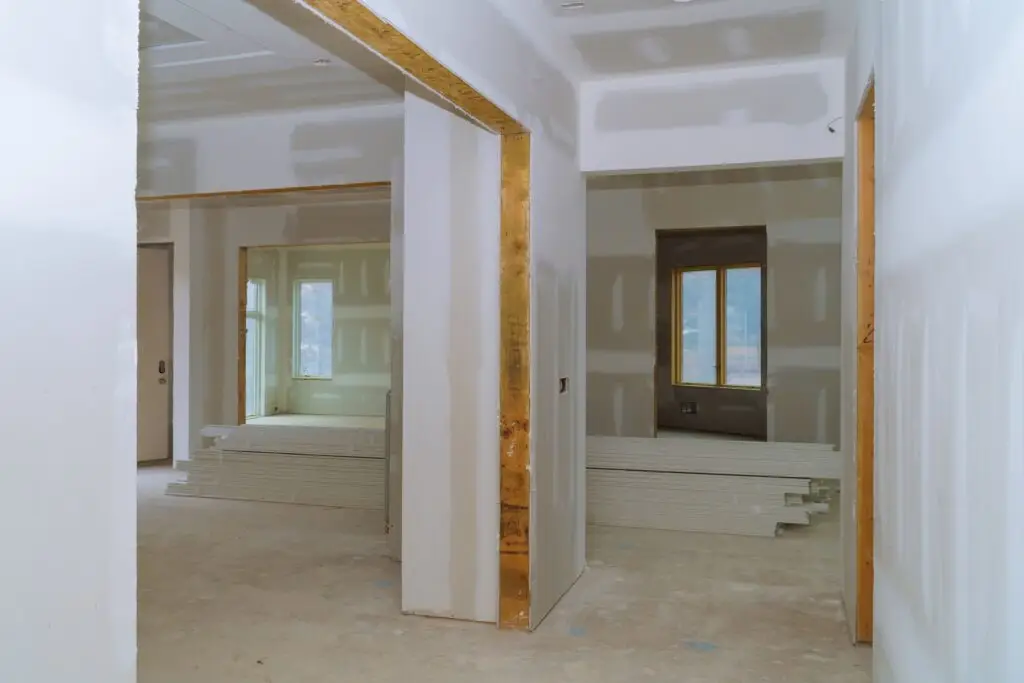
Quick Answer: Drywall Is the Most Common Material for Interior Walls
Drywall is the “Gold Star” choice for modern American homes because it is fast to install, easy to repair, and naturally fire-resistant. While Standard Drywall is the go-to for bedrooms and living areas, specialist applications like kitchens and basements require moisture-resistant or fire-rated versions to meet 2026 building codes and safety standards.
Types of Drywall: The Specialist Selection
To achieve a Masterpiece finish, you must match the board type to the specific environment of the room.
Standard Drywall (White Board)
This is the workhorse of the industry. It typically comes in $1/2$-inch thickness and is used for walls and ceilings in dry areas like bedrooms, dining rooms, and hallways.
Moisture-Resistant Drywall (Green or Purple Board)
In 2026, we prioritize “Gold Star” moisture protection in humid zones. This drywall features a specialized coating or treated core to prevent mold and mildew.
- Best For: Bathrooms, laundry rooms, and basement walls.
Fire-Rated Drywall (Type X)
Type X drywall is reinforced with glass fibers and is significantly denser than standard boards. It is designed to withstand fire for longer periods, providing a critical safety “Masterpiece” for your family.
- Best For: Garages, furnace rooms, and multi-family unit partitions.
Benefits of Drywall: The Gold Star Advantage
- Fire Resistance: The gypsum core contains water in crystalline form, which acts as a natural fire suppressant when heated.
- Acoustic Insulation: Drywall helps dampen sound transmission between rooms, especially when using “Gold Star” sound-dampening variants.
- Versatility: It can be easily cut to fit any architectural feature and provides a smooth surface for paint, wallpaper, or texture.
- Ease of Repair: Unlike plaster, small dents or holes in drywall can be fixed as a simple DIY “Masterpiece” or professional patch.
When to Use Drywall
Drywall is the specialist-recommended choice for:
- New Construction: It is the most efficient way to finish large areas quickly.
- Remodeling: Use it to create new partitions or replace damaged plaster walls.
- Basement Finishing: Combined with moisture-resistant technology, it turns cold basements into habitable Gold Star living spaces.
FAQ: Specialist Insights
Is drywall and sheetrock the same thing?
Yes. “Sheetrock” is simply a brand name for drywall that has become a synonymous term in the U.S. market. Both refer to the same “Gold Star” gypsum board technology.
Can I use standard drywall in a bathroom?
It is not recommended. For a “Masterpiece” result that lasts, always use moisture-resistant board (Green or Purple) in any area subject to steam or splashes to prevent long-term mold growth.
Build Your Masterpiece with Greater Boston Contractors
At Greater Boston Contractors, we don’t just hang boards; we create the framework for your life. Our specialists provide “Gold Star” precision in hanging, taping, and finishing, ensuring your walls are perfectly smooth and structurally sound. Whether you are finishing a basement or building an addition, we bring the expertise to make your interior a Masterpiece.
- Drywall Specialists: Expert installation and seamless finishing.
- Code-Compliant Safety: Using Type X and moisture-rated boards where it counts.
- The Gold Star Standard: Quality you can see and feel in every room.
Ready to give your interior a professional Gold Star finish? Contact Greater Boston Contractors today for a specialist drywall quote and let’s start your Masterpiece project!