If you have just installed a new deck, fence, or pergola, you might be tempted to apply a fresh coat of paint immediately to match your home’s aesthetic. However, when dealing with pressure-treated lumber, patience is the most important tool in your kit.
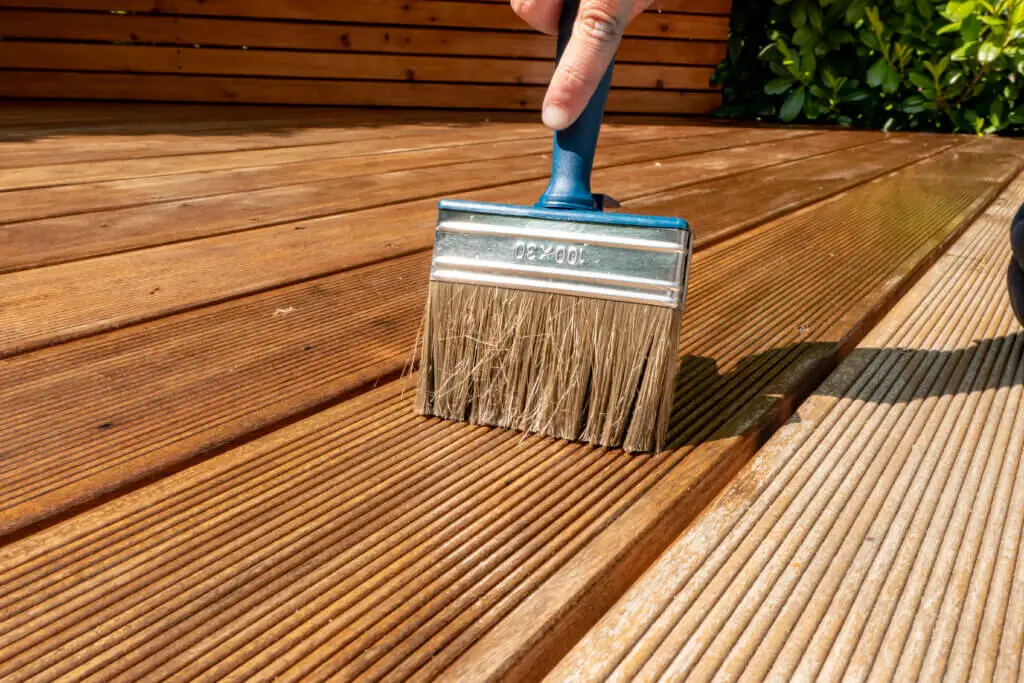
Quick Answer: No—It Needs Time to Dry
In almost every scenario, you cannot paint pressure-treated wood right away. Unlike standard kiln-dried lumber, pressure-treated wood is saturated with liquid chemicals and water during the manufacturing process. If you apply paint to wood that is still “wet” on the inside, the finish will fail—often within weeks. Depending on your local climate and the wood’s exposure to sunlight, the drying process can take anywhere from a few weeks to several months.
How Pressure Treated Wood Is Made
To understand why you have to wait, it helps to understand how the wood is prepared.
Chemical Treatment Process
Pressure treatment involves placing a load of lumber into a giant pressurized cylinder (an autoclave). The air is vacuumed out, and a solution of water and chemical preservatives (such as Copper Azole or MCQ) is pumped in under high pressure. This forces the preservatives deep into the wood fibers to protect against rot, decay, and termite infestation.
Moisture Content After Installation
When this wood arrives at the lumber yard or your home, it is often “dripping wet.” The internal moisture content (MC) can be as high as 50% to 75%. For paint to adhere properly, the moisture content generally needs to drop below 15%.
Risks of Painting Too Early
Applying a film-forming finish like paint to wet wood creates a “vapor barrier” that leads to several structural and aesthetic problems.
Peeling and Blistering Paint
As the sun warms the wood, the moisture trapped inside tries to evaporate. Since the paint seals the surface, the water vapor pushes against the paint film from the inside out. This results in unsightly bubbles, blisters, and eventually large flakes of paint peeling away.
Mold and Trapped Moisture
Paint doesn’t just keep water out; it keeps the internal moisture in. By sealing wet wood, you may inadvertently create an environment where mold and mildew can thrive beneath the paint layer. This can lead to premature wood softening and a “musty” smell, particularly in shaded areas.
How to Tell When Treated Wood Is Ready to Paint
You shouldn’t guess based on the calendar alone. Use these two reliable methods to check for readiness.
The Water Absorption Test (The “Bead Test”)
This is the simplest DIY method. Pour a small amount of clean water onto various sections of the wood.
- If the water beads up: The wood is still too wet or contains factory-applied wax/water repellent. Do not paint yet.
- If the water soaks in quickly: The wood fibers are dry and porous enough to accept a primer and paint.
Moisture Meter Guidelines
For the most accurate results, professionals use a wood moisture meter. You can find these at most hardware stores.
- Above 20%: Too wet.
- 15% to 20%: Use caution; may be acceptable for some specialized stains, but risky for paint.
- Below 15%: Ideal for painting.
FAQs
Can I stain pressure treated wood instead?
Yes, and many professionals recommend it. Oil-based semi-transparent stains can often be applied sooner than paint because they penetrate the fibers rather than forming a rigid film on top. However, the wood still needs to pass the “water test” before application.
What primer works best on treated wood?
Always use a high-quality, external-grade wood primer. Many experts prefer an oil-based primer because it provides a better “mechanical bond” to the treated fibers and is more effective at blocking tannins that might bleed through the paint. Once the oil-based primer is dry, you can top-coat it with high-quality latex paint.
Is painting treated wood required?
Painting is not required for structural integrity, as the chemical treatment protects against rot. However, painting or staining provides a UV barrier that prevents the wood from turning grey and helps minimize “checking” (cracking and splitting) caused by repeated wetting and drying cycles.
Need Professional Help with Your Next Outdoor Project?
Achieving a flawless, long-lasting finish on pressure-treated wood requires precision and the right timing. At Greater Boston Contractors, we handle everything from structural installation to the final professional finish. We ensure your project is built to last and looks beautiful for years to come.
Contact Greater Boston Contractors today for an estimate on your next home improvement project!