The bedroom is the most intimate space in a home, making it the natural choice for a dedicated reading area. Unlike a living room nook, a bedroom reading corner is a private retreat that promotes relaxation and helps bridge the gap between a busy day and a restful night’s sleep.
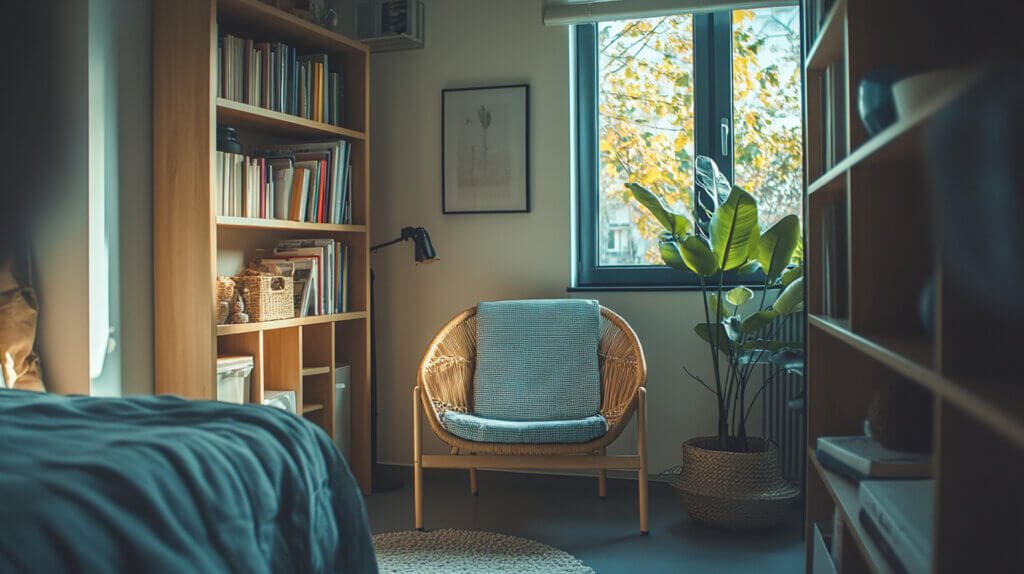
Quick Answer: A Chair, Good Light, and Quiet Zone Are Key
To create a functional bedroom reading corner, you only need three essential elements: a supportive chair that encourages good posture, a dedicated light source that prevents squinting, and a location away from the bedroom’s “digital hubs” (like televisions or desks). The goal is to create a “micro-zone” that signals to your brain that it is time to disconnect and unwind.
Why bedrooms are ideal for reading corners
Bedrooms are naturally quieter than the rest of the house, offering a built-in sound barrier from household noise. Furthermore, establishing a pre-sleep reading routine in a dedicated chair—rather than in bed—is highly recommended by sleep experts. It prevents your brain from associating the bed with wakeful activities, which can help combat insomnia.
Layout Ideas for Bedroom Reading Corners
The layout of your reading corner depends largely on the “flow” of your bedroom.
Corner chair setups
The most common and effective layout is the “diagonal corner.” By placing a comfortable armchair at a 45-degree angle in a corner furthest from the door, you create a sense of privacy. This layout works best when paired with a small round side table and a floor lamp. In U.S. master suites, this is often the preferred way to fill an empty corner across from the foot of the bed.
Window-side reading areas
If your bedroom has a window, placing your seating next to it is the gold standard. During the day, you benefit from natural “cold” light which is excellent for focus. For larger bedrooms, a “Chaise Lounge” positioned parallel to the window provides a luxury hotel feel, allowing you to stretch out fully while maintaining a view of the outdoors.
Furniture and Storage Tips
In a bedroom, furniture should be functional without feeling bulky or cluttering the space.
Compact seating options
If you are working with a standard-sized American bedroom (roughly 12×12 or 14×14 feet), a massive recliner might be too much. Consider:
- The Slipper Chair: Armless and compact, it fits into tight corners easily.
- The Barrel Chair: Provides a “hugged” feeling with a small footprint.
- The Papasan or Bean Bag: For a more casual, bohemian guest room or teenager’s bedroom.
Floating shelves and side tables
To keep the floor looking spacious, use vertical space.
- Floating Shelves: Instead of a heavy bookcase, install three or four floating shelves above your chair. This keeps your “To Be Read” (TBR) pile organized without taking up square footage.
- C-Side Tables: These tables have a base that slides under the chair, allowing the surface to hover over your lap—perfect for a cup of tea or a small book.
Lighting for Reading Comfort
Lighting can make or break the usability of your nook.
Task lamps vs natural light
While natural light is beautiful, it is inconsistent. A dedicated task lamp is a necessity. Look for LED lamps with a “Warm White” color temperature (around 2700K to 3000K). This mimics the soft glow of traditional incandescent bulbs, which is less disruptive to your circadian rhythm than “Daylight” bulbs (5000K+).
Avoiding eye strain
To prevent eye fatigue:
- Positioning: The light should come from behind your shoulder or from the side, never directly in front of your face.
- Adjustability: Choose a lamp with a “gooseneck” or adjustable arm so you can direct the beam specifically onto the pages of your book, reducing shadows.
FAQs
Can small bedrooms have reading corners?
Yes. In very small rooms, we recommend the “Window Seat” approach or using a corner-specific “wedge” chair. Even a simple floor cushion and a wall-mounted reading light can define a space without requiring heavy furniture.
Should reading corners match bedroom décor?
While the corner should feel like part of the room, it can serve as an “accent zone.” You can use a different fabric texture or a slightly bolder color for your reading chair to visually separate it from the sleeping area.
Are built-ins better than standalone furniture?
Built-ins offer a high-end, “tailored” look and can add value to your home. However, standalone furniture is more flexible. If you enjoy rearranging your room or are currently renting, high-quality standalone furniture is the better investment.
At Greater Boston Contractors, we believe your bedroom should be more than just a place to sleep—it should be a destination for relaxation. Our design-build team can help you integrate custom shelving or window seating that fits perfectly with your home’s architecture. Contact us today to start planning your perfect bedroom retreat.
Check ir out: Creative ideas for remodeling a bedroom on any budget