Selecting flooring for a basement requires a specialist’s understanding of “hydrostatic pressure” and vapor transmission. Because basements are surrounded by soil, they are naturally prone to dampness and temperature shifts that would warp or ruin traditional materials used in upper levels of a home.
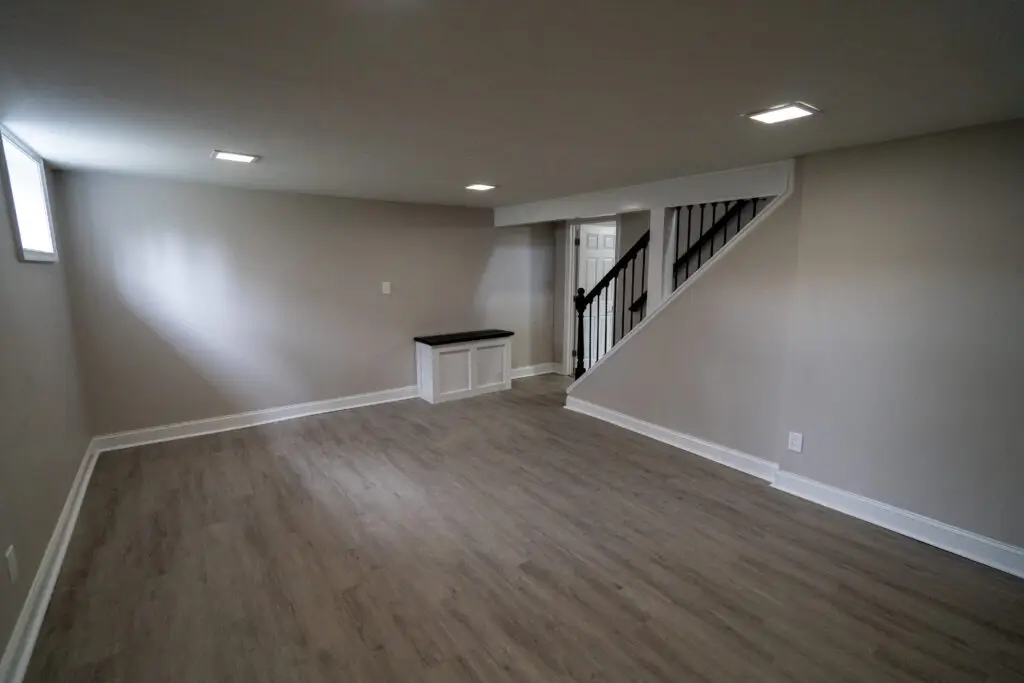
Quick Answer: Vinyl, Tile, and Engineered Flooring Work Best for Basements
The most resilient options for a basement are Luxury Vinyl Plank (LVP), Ceramic/Porcelain Tile, and Engineered Hardwood. These materials are specifically engineered to withstand the unique subfloor conditions of a basement. In 2026, LVP is the industry-leading choice due to its waterproof core and ease of installation over concrete slabs, providing a Gold Star look without the vulnerability of organic wood.
Why Basement Flooring Is Different: The Specialist Perspective
To build a Masterpiece basement, you must first acknowledge the three environmental hurdles that differentiate below-grade spaces from the rest of your home:
Moisture Exposure
Basements are the lowest point in a home’s drainage system. Even without a flood, concrete is porous and “breathes” moisture vapor. Flooring must be able to handle this constant vapor transmission without trapping it, which leads to mold, or absorbing it, which leads to swelling.
Temperature Fluctuations
Concrete slabs act as a thermal mass, staying much cooler than the air in the room. This temperature differential can cause certain materials to expand and contract or create condensation on the underside of the flooring.
Subfloor Limitations
Basement subfloors are almost always concrete. This substrate is rarely perfectly level and is prone to minor shifting. A Gold Star flooring choice must be able to accommodate these imperfections or be installed with a specialist-grade underlayment.
Best Basement Flooring Options: The 2026 Selection
Luxury Vinyl Plank (LVP)
This is the modern specialist’s favorite. High-quality LVP features a Stone Plastic Composite (SPC) core that is 100% waterproof. It mimics the texture of real oak or walnut and can be installed as a “floating floor,” allowing the concrete subfloor to breathe underneath.
Ceramic or Porcelain Tile
Tile is the most durable, long-term Masterpiece option. It is completely unaffected by water and is easy to sanitize. While it can be cold underfoot, it is the perfect candidate for Radiant Floor Heating systems, which are a trending Gold Star upgrade in 2026.
Engineered Wood
If you insist on the feel of real timber, engineered wood is the only specialist-approved choice. Unlike solid hardwood, engineered planks consist of a real wood veneer atop a plywood base, which provides structural stability against humidity-induced warping.
Epoxy Flooring
For a modern, industrial, or minimalist look, epoxy is a seamless and indestructible option. It bonds directly to the concrete and is available in metallic or “flake” finishes, making it a high-performance choice for home gyms or workshops.
Flooring Options to Avoid
In 2026, specialists strictly advise against these materials in a basement:
- Solid Hardwood: The natural fibers will inevitably cup or buckle when exposed to concrete’s moisture.
- Traditional Laminate: Most laminate contains a fiberboard core that acts like a sponge when it encounters dampness.
- Standard Carpet & Pad: Unless the basement is perfectly dry and climate-controlled, carpet traps dust mites and fosters mold growth within the padding.
How to Choose the Right Option: The Gold Star Checklist
- Test for Moisture: Before choosing, perform a calcium chloride test on your slab to determine the vapor emission rate.
- Define the Use: A home theater may benefit from the warmth of Engineered Wood, while a laundry area requires the waterproof security of Tile.
- Consider Comfort: If you prioritize warmth, look for flooring with pre-attached cork or foam underlayments.
- Height Clearance: If your basement has low ceilings, choose a “low-profile” option like LVP or Epoxy to maximize vertical space.
FAQ: Specialist Insights
What is the cheapest basement flooring?
Painted concrete or peel-and-stick vinyl tiles are the most budget-friendly. However, for a long-term Masterpiece result, LVP offers the best value by balancing cost with a lifetime of durability.
Can you put hardwood in a basement?
Solid hardwood is a “No.” However, Engineered Hardwood is specifically designed for this purpose. Always ensure you use a high-quality moisture barrier underlayment to maintain your Gold Star warranty.
Transform Your Lower Level with Greater Boston Contractors
At Greater Boston Contractors, we don’t just install floors; we engineer environments. We understand the technical nuances of basement renovations and help you select the materials that will stand the test of time. Whether you envision a luxury suite or a functional family space, we bring the Gold Star expertise needed to make your basement a true Masterpiece.
- Basement Specialists: Expert knowledge of below-grade construction.
- Moisture-Resistant Solutions: Protecting your home from the ground up.
- Quality You Can Stand On: Precision installation for a flawless finish.
Ready to elevate your basement from a storage space to a sanctuary? Contact Greater Boston Contractors today for a specialist flooring consultation and let’s build your Gold Star basement together!