The short answer is: Almost always, you need a permit. While the idea of a “DIY weekend project” without paperwork is tempting, Massachusetts building codes are designed to prevent structural collapses and ensure fire safety. Building without a permit can lead to complications that far outweigh the time saved on an application.
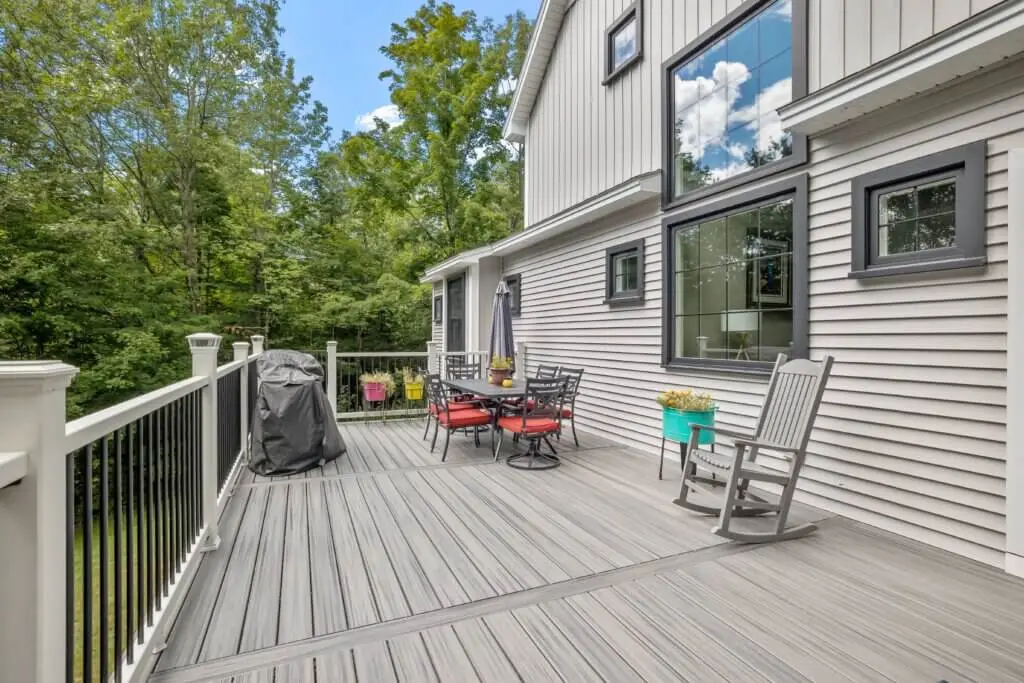
Quick Answer: Sometimes, But It Depends on Size and Height
In Massachusetts, a building permit is generally required if the deck is attached to the house, exceeds 200 square feet, or is more than 30 inches above the ground. Even if your project seems small, local zoning bylaws (especially regarding property setbacks) often trigger the need for official approval.
When You DO NOT Need a Permit
There are very few exceptions under the Massachusetts State Building Code (780 CMR), but you might be exempt if your project meets all of these criteria:
- Ground-Level Decks: The deck is less than 30 inches above the adjacent grade at all points.
- Small, Freestanding Structures: The deck is under 200 square feet and is not attached to the dwelling.
- Not an Exit: The deck does not serve the required exit door of the home.
- Ordinary Repairs: Replacing a few deck boards (not the structure) or re-staining usually does not require a permit.
When a Permit Is Statically Required
If your project involves any of the following, a permit is non-negotiable:
- Attached Decks: Any deck physically connected to the house (via a ledger board) requires a permit to ensure the connection is watertight and structurally sound.
- Elevated Decks: Any platform more than 30 inches off the ground. These require specific railing heights and structural bracing.
- Structural Changes: Replacing posts, joists, or pouring new concrete footings.
- Commercial Use: Any deck for a business or multi-family property.
Deck Permit Rules in Massachusetts (Local Focus)
In the Greater Boston and Marlborough areas, additional factors come into play:
- Frost Line Requirements: Massachusetts code requires footings to be at least 4 feet (48 inches) deep to prevent shifting during winter. An inspector must verify this before you pour concrete.
- Zoning Setbacks: Marlborough’s Zoning Ordinance dictates how close a deck can be to your neighbor’s property line. Even a “no-permit” deck must follow these “setback” rules.
- Wetlands Protection: If you live near a pond or wetland, you may need approval from the local Conservation Commission before the Building Department will issue a permit.
Risks of Building Without a Permit
Fines and Penalties
In Massachusetts, building without a permit can result in fines of up to $1,000 per day of non-compliance. You will also likely be charged double or triple the original permit fee once discovered.
Forced Removal
If a building inspector discovers an unpermitted deck that doesn’t meet code (e.g., shallow footings or improper flashing), they have the legal authority to order the total demolition of the structure at your expense.
Insurance and Resale Issues
- Insurance: If someone is injured on an unpermitted deck, your homeowner’s insurance may refuse to cover the claim.
- Selling Your Home: During a home inspection, unpermitted work is a major red flag. Buyers may demand you “legalize” the deck—which involves tearing up floorboards for inspections—or lower your asking price significantly.
FAQ: Deck Permits
What happens if I build a deck without a permit?
You risk heavy fines, legal action from the city, and potential issues with your insurance. Most importantly, you lose the “safety net” of a professional inspection that ensures your deck won’t collapse.
Do all decks require inspection?
If a permit was required, yes. Usually, there are two key inspections: one for the footings (before concrete is poured) and a final inspection once the railings and stairs are complete.
Need Help With Deck Permits and Construction?
Navigating the building departments in Marlborough or Greater Boston can be overwhelming. At Greater Boston Contractors, we handle the entire permitting process for you—from drafting code-compliant plans to coordinating with city inspectors.
- Hassle-Free Permitting: We manage the paperwork and Conservation Commission filings.
- Code-Expertise: Every deck we build meets or exceeds 2006 Massachusetts safety standards.
- Safety First: We ensure your footings are deep and your ledger is flashed perfectly.
Contact Greater Boston Contractors today to start your permitted deck project with a free consultation!