In the modern American landscape, the “Outdoor Living Room” has evolved into a fully functional culinary hub. A covered outdoor kitchen is no longer just a luxury; it is a strategic investment that bridges the gap between the comfort of your interior and the freedom of the outdoors.
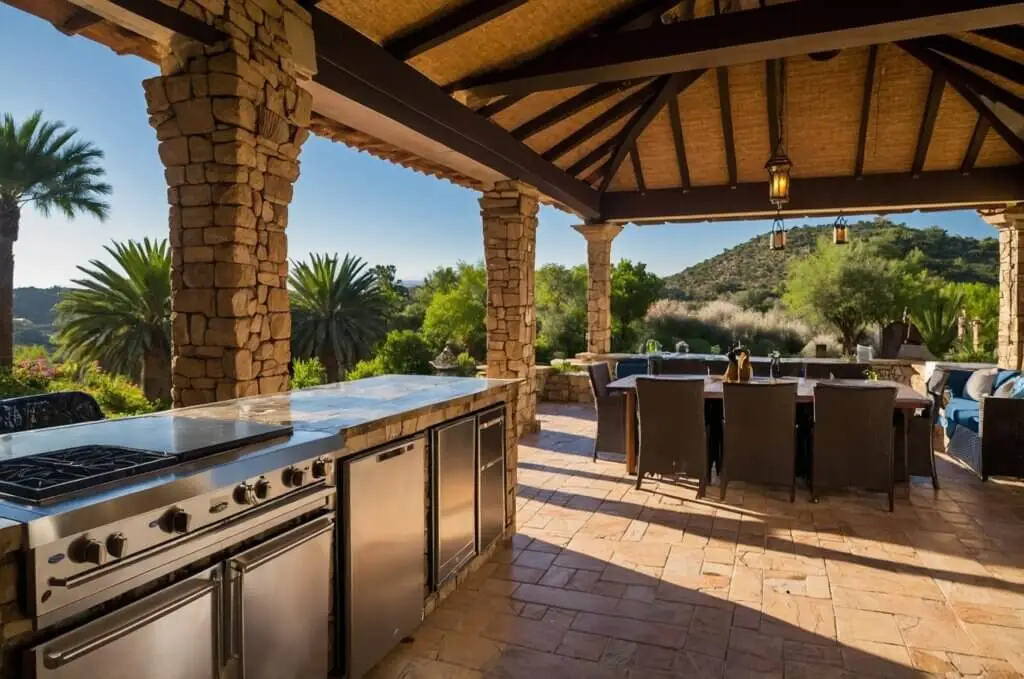
Quick Answer: Roofed Structures Extend Use and Protect Equipment
A roofed structure is the single most important upgrade for an outdoor kitchen. It transforms a seasonal cooking area into a year-round destination by providing protection from UV rays, rain, and snow. Beyond comfort, coverage significantly extends the lifespan of high-end stainless steel appliances, cabinetry, and stone countertops by shielding them from the corrosive effects of direct weather exposure.
Why coverage matters for weather and longevity
Even the most durable professional-grade grills are susceptible to “weathering.” In the U.S., regional climates—from the humid South to the snowy Northeast—can cause premature oxidation or damage to internal components. A roof structure prevents water from pooling in burners and electronics, keeps stone surfaces from fading under intense sun, and allows the homeowner to grill comfortably during a summer rainstorm or a brisk autumn evening.
Popular Types of Covered Outdoor Kitchens
Choosing the right structure depends on your home’s existing architecture, your budget, and how much “open air” feeling you want to retain.
Pergolas (open vs. louvered)
Pergolas are the quintessential choice for those who want a blend of shade and sky.
- Open-Rafter Pergolas: These provide partial shade and a classic aesthetic. While they don’t offer rain protection, they are excellent for defining the space and supporting climbing vines or outdoor lighting.
- Louvered Roof Systems: A massive trend in American luxury homes. These motorized systems allow you to tilt the slats to follow the sun or close them completely to create a watertight seal when it rains. They offer the best of both worlds.
Pavilion-style roofs
A pavilion is a freestanding structure with a fully closed roof, usually supported by four or more heavy-duty pillars or stone columns.
- Aesthetic Appeal: These often feature vaulted ceilings with exposed cedar or tongue-and-groove wood finishes.
- Complete Protection: Pavilions are the safest choice for kitchens that include high-end electronics like outdoor televisions, sound systems, and refrigerators.
Attached roof extensions
If the kitchen is situated directly against the home, an attached roof extension (or “Lean-to”) is often the most seamless option.
- Structural Integration: By tying into the home’s existing roofline, the outdoor kitchen feels like a natural extension of the house rather than an afterthought.
- Cost Efficiency: Since it uses the house wall for support, it may require fewer vertical posts, maximizing the footprint for seating and movement.
Roofing Materials That Work Best
The material you choose should balance durability with the architectural style of your primary residence.
Asphalt shingles
The most common roofing material in the U.S. due to its affordability and versatility.
- Pros: Easy to match with the existing home’s roof; excellent longevity (20-30 years); widely available.
- Cons: Can be heavy, requiring more robust structural support.
Metal roofing
Whether it is standing seam or corrugated panels, metal is a favorite for contemporary and farmhouse-style outdoor kitchens.
- Pros: Extremely durable, fire-resistant (crucial for cooking areas), and excellent at shedding snow and rain. It also reflects heat, keeping the kitchen area cooler in the summer.
- Cons: Can be noisy during heavy rain, though proper insulation can mitigate this.
Polycarbonate panels
Often used on pergolas or modern structures, these translucent or tinted panels allow natural light to filter through while blocking UV rays and rain.
- Pros: Lightweight and impact-resistant.
- Cons: Can show dirt or debris more easily than solid roofs; may have a shorter lifespan than metal or shingles in extreme climates.
Design & Code Considerations
Building an outdoor kitchen involves more than just aesthetics; it requires adherence to safety standards and local building codes.
Ventilation and smoke control
If you are cooking under a solid roof, ventilation is non-negotiable.
- Vent Hoods: Just like an indoor kitchen, professional outdoor grills produce heat, grease, and smoke. A high-CFM (Cubic Feet per Minute) outdoor-rated vent hood is required to pull smoke away from the ceiling to prevent staining and fire hazards.
- Clearance: Building codes typically require a specific distance between the grill surface and any combustible materials (like wood ceilings). Using a “grill jacket” or non-combustible framing is standard practice.
Electrical and plumbing basics
- GFCI Outlets: All exterior electrical outlets must be Ground Fault Circuit Interrupter protected and housed in weatherproof covers.
- Drainage: Plumbing for outdoor sinks must be planned with winterization in mind. In colder U.S. regions, pipes must be easily drained to prevent bursting during the winter.
- Gas Lines: Most permanent outdoor kitchens use natural gas. This requires a dedicated line run from the home’s main supply, which must be installed by a licensed professional.
FAQs
Do outdoor kitchens need permits?
In most U.S. jurisdictions, yes. Any project involving permanent electrical, plumbing, or gas lines—as well as any structure with a roof—typically requires a building permit. Failure to obtain one can result in fines and issues during the home resale process.
How much does a covered outdoor kitchen cost?
Prices vary wildly based on materials and complexity. A basic covered setup may start around $15,000, while high-end custom pavilions with professional appliances and stone masonry can easily exceed $50,000 to $100,000.
Can an existing patio be enclosed?
Yes, but it requires a structural assessment. Standard concrete patios may not be thick enough to support the weight of heavy roof pillars or masonry. We often reinforce the footings before building the kitchen structure to ensure long-term stability.
At Greater Boston Contractors, we specialize in creating outdoor culinary spaces that are as functional as they are beautiful. From complex roof tie-ins to custom masonry and high-performance appliance installation, we manage every detail of your project. Transform your backyard into a four-season retreat. Contact us today for a professional consultation and custom design quote.