Choosing the material for your kitchen cabinets is a complex decision that dictates the final look, the level of durability, and the overall cost of your renovation. The “best” material isn’t about finding the single most expensive option; it’s about aligning the material properties—hardness, grain pattern, and moisture resistance—with your design goals and budget.
Greater Boston Contractors guides homeowners through the technical differences between wood species and engineered materials, ensuring your investment results in long-lasting, beautiful cabinetry.
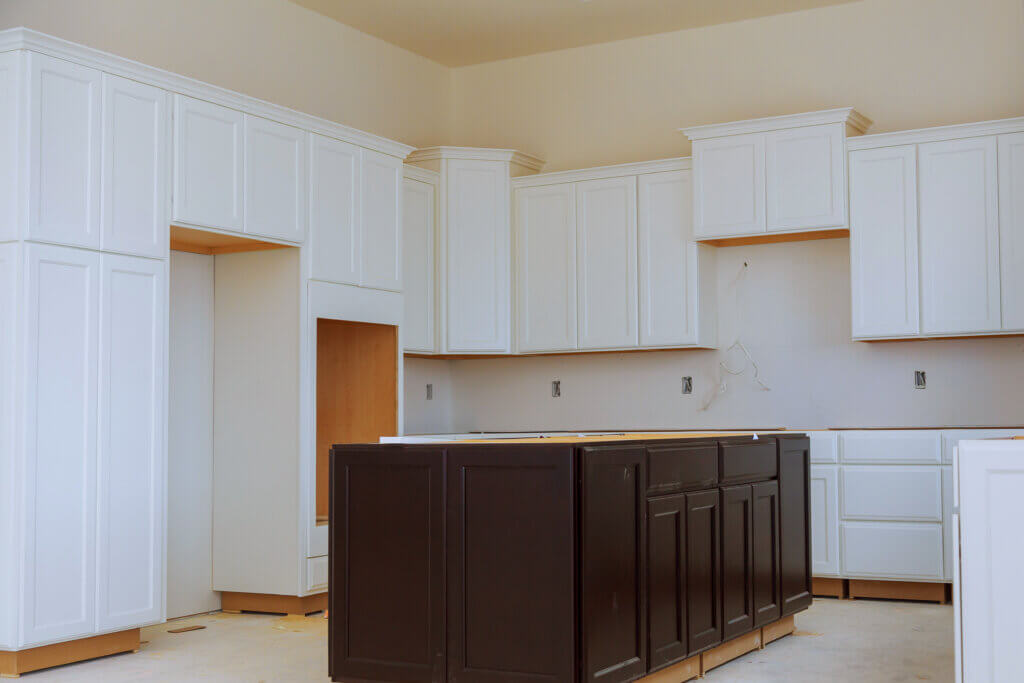
Quick Answer: Best Woods by Goal
Different kitchen goals require different materials. Here’s a quick breakdown of material priorities based on the desired outcome.
Durability: Maple, Oak, Hickory (High-Traffic Kitchens)
For families with high-traffic kitchens, durability and resistance to dents are paramount.
- Maple: Hard, dense, and has a fine, uniform grain that resists denting and absorbs paint smoothly. Excellent all-around choice.
- Hickory: One of the hardest domestic woods, ideal for maximum durability, though its busy grain may not suit every design.
- Oak (Red or White): Extremely hard and durable, offering a classic, distinctive grain texture.
Painted Cabinets: Smooth Woods/Materials That Finish Cleanly
If a solid, seamless painted look is the goal, you need a material with minimal grain pattern:
- MDF (Medium-Density Fiberboard): The smoothest, most stable surface for paint. It won’t expand and contract like solid wood, minimizing cracks in the paint at the joints.
- Poplar/Birch: Both are economical hardwoods with tight, subtle grain patterns that accept paint well, though MDF is still superior for the smoothest finish.
Solid Wood vs. Engineered Materials (The Real Decision)
A modern kitchen often utilizes both solid wood and engineered wood in its construction, with each material playing a specific role.
Plywood vs. MDF vs. Particle Board (Strength, Moisture, Finish Quality)
| Material | Composition | Best For | Pros & Cons |
| Plywood (High-Grade) | Thin layers of wood veneer glued together, alternating grain direction. | Cabinet Boxes (sides, tops, bottoms) | Pros: Excellent strength-to-weight ratio, superior moisture resistance, holds screws well. Cons: Higher cost. |
| MDF (Medium-Density Fiberboard) | Fine wood fibers compacted with resin. | Painted Door Panels | Pros: Incredibly smooth, superior stability (no warping), takes paint perfectly. Cons: Very heavy, poor moisture resistance if edges aren’t sealed. |
| Particle Board | Coarser wood chips compressed with resin. | Interior Shelving (low-cost) | Pros: Cheapest option. Cons: Extremely susceptible to water damage (swelling), poor screw retention, low durability. |
Best Use Cases: Box Construction vs. Door Panels
- Box Construction: High-quality plywood is the gold standard for the structural boxes due to its strength and resistance to humidity.
- Door Panels: Solid wood is traditional, but modern custom cabinets often use MDF for the center panels of painted Shaker doors because MDF is more stable than wood and prevents the center panel from expanding and contracting (which causes paint cracks at the joints).
Popular Wood Species Compared
The choice of wood species determines the grain, natural color, and how the cabinet accepts stain.
Maple: Tight Grain + Durability
- Characteristics: Very hard, closed (tight) grain structure, light creamy color.
- Best For: Homeowners who want a very smooth, consistent finish. Maple is an excellent choice for both staining (it looks uniform) and painting (it stays smooth). It is highly durable and resists denting.
Oak: Strong Grain + Classic Look
- Characteristics: Extremely hard and durable, known for its deep, prominent, open grain pattern (especially Red Oak). Color can range from white/gray to red/brown.
- Best For: Traditional, rustic, or farmhouse styles where the texture of the wood grain is meant to be a prominent visual feature.
Cherry: Premium Color Aging and Character
- Characteristics: Moderately hard wood with a fine, smooth grain. Starts as a light pinkish-brown and darkens significantly over time when exposed to natural light (patina).
- Best For: Luxury, formal, and traditional kitchens. The wood’s natural aging process is highly valued, adding depth and character over the years.
Birch/Poplar: Budget-Friendly / Paint-Friendly Options
- Characteristics: Softer than maple or oak. Birch has a moderate grain, while Poplar is very soft and porous.
- Best For: Economical choice for painted cabinets. Since these woods are less expensive than maple, using them when painting can offer significant savings. Note: Poplar is too soft for heavy-duty use or for staining.
Contractor Tips for a “Long-Lasting” Cabinet Build
Longevity depends as much on the finishing system and hardware as it does on the core material.
Finish System (Paint vs. Stain), Humidity Control, and Hardware Quality
- Catalyzed Finish: For both paint and stain, ensure the cabinet finish is a professional-grade, catalyzed varnish, lacquer, or polyurethane. This hardens the surface, protecting the wood against kitchen grease, moisture, and mild abrasions far better than standard brush-applied house paint.
- Humidity: In regions with high seasonal humidity fluctuations (like the Northeast), expect solid wood doors to expand and contract slightly, which can cause small hairline cracks in paint near the door joints. This is normal and a sign of natural wood movement.
- Hardware: Always prioritize high-quality, full-extension, soft-close slides and hinges. Low-quality hardware is the first component to fail in a cabinet system.
Where to Spend vs. Save (Boxes, Doors, Soft-Close Slides)
- Spend: On the drawer boxes (always choose dovetail joints and solid wood sides) and soft-close slides. This is the core functionality.
- Save: On the cabinet boxes themselves. A high-quality plywood box with a melamine interior is functionally equivalent to an expensive solid wood box and offers better cleanability.
FAQs
Is MDF a bad choice for kitchens?
No, MDF is not a bad choice; it is often the superior choice for painted doors and panels. Its stability means it doesn’t move or warp with temperature changes, resulting in a flawless, crack-free painted finish. Where it must be avoided is in the cabinet box construction near sinks or floors, due to its poor moisture resistance when edges are exposed.
Is plywood always worth it?
Plywood is nearly always worth the upgrade for the cabinet boxes. While MDF/particle board boxes are cheaper, plywood provides superior screw-holding power, much better resistance to swelling from moisture (especially important around the sink and dishwasher), and a lighter finished product.
What’s best for a modern flat-panel look?
Slab doors made of MDF with a high-quality laminate or thermofoil finish are the best choice. This combination provides the perfectly smooth, clean, and seamless look required for modern design while offering excellent durability and resistance to moisture in the finished product.
Ready to select the perfect materials for your kitchen?
Contact Greater Boston Contractors today for a detailed consultation on cabinet construction, material selection, and professional installation services!