Kitchen cabinets are the single largest visual element in a kitchen remodel and account for a significant portion of the budget. Understanding the differences between cabinet types—beyond just the door color—is essential. The structure (framed vs. frameless) and the door fit (overlay vs. inset) impact not only the final aesthetic but also storage capacity, accessibility, and cost.
Greater Boston Contractors provides expert guidance on selecting cabinet systems that balance your design vision with long-term functionality and durability.
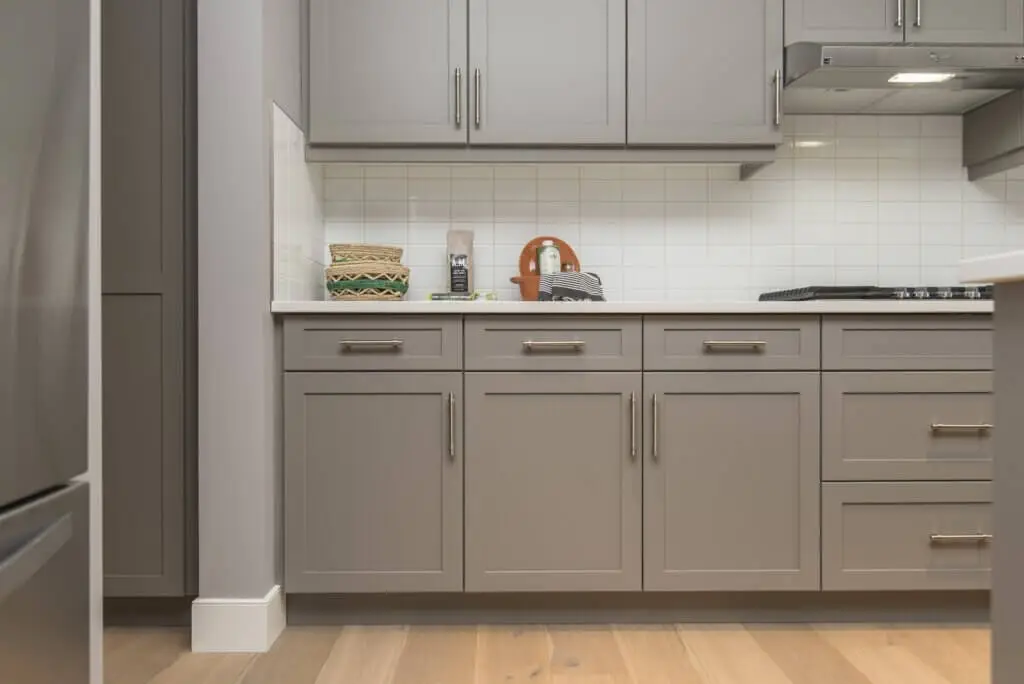
Quick Answer: The “Types” That Matter Most
When discussing cabinet “types,” professionals refer less to color and more to the underlying method of construction and how the door relates to the cabinet box.
Construction: Framed vs. Frameless (“Euro-Style”)
- Framed: The traditional American standard. A face frame (like a picture frame) is attached to the front of the cabinet box, providing stability and a solid mounting point for doors and drawers.
- Frameless: Also known as “Euro-style,” this system uses a thicker box without a face frame. Doors attach directly to the inside walls of the box.
Door Fit: Inset, Full Overlay, Partial Overlay
This describes how much of the cabinet face is covered by the door and drawer fronts:
- Inset: The door or drawer front sits inside the face frame, perfectly flush with the frame.
- Full Overlay: The door covers almost the entire cabinet box edge, leaving only a small gap (about 1/8 inch) between the doors. Used for frameless and modern framed cabinets.
- Partial Overlay: The door covers the opening but leaves a significant portion of the face frame visible (typically 1/2 inch to 1 inch). Common in older traditional cabinets.
Cabinet Construction: Framed vs. Frameless
The construction style dictates the cabinet’s structural strength, hinge placement, and usable space.
Storage Access, Hinge Mounting, and Overall Look
| Feature | Framed Construction (Traditional) | Frameless Construction (Euro-Style) |
| Structure | Features a 1.5-inch wide hardwood frame at the front. | No face frame; relies on the thicker box for strength. |
| Storage Access | The frame reduces the door opening, creating a small “lip” that can interfere with large items or drawer slides. | Full access to the interior; drawers are generally wider. |
| Hinge Mounting | Hinges mount directly to the face frame. | Hinges mount directly to the inside of the cabinet box walls. |
| Look | More visual breaks and depth, suitable for traditional or transitional styles. | Clean, continuous lines, ideal for sleek, modern, or contemporary kitchens. |
Which Is Better for Modern vs. Traditional Kitchens?
- Modern/Contemporary: Frameless cabinets are generally preferred. The full overlay doors hide the box entirely, creating a seamless wall of cabinetry that looks sleek and minimal.
- Traditional/Transitional: Framed cabinets are versatile. They are necessary if you choose the classic inset door style and are widely used for Shaker and traditional raised panel designs.
Inset vs. Overlay: The Cost + Look Tradeoff
The door fit is the primary differentiator in the cabinet’s visual style and manufacturing complexity.
Why Inset Usually Costs More (Precision Fit)
Inset cabinets are the most expensive option, often adding 15% to 30% to the cost compared to full overlay.
- Complexity: Because the door must fit perfectly inside the frame, it requires extremely precise measurements, cuts, and installation. If the house or cabinet box shifts due to environmental factors (like humidity changes), the doors can stick or rub against the frame.
- Aesthetic: Provides a high-end, furniture-like appearance with exposed hinges often used as a decorative element.
How Full Overlay Impacts the “Seamless” Look
Full overlay doors sit tightly over the cabinet box, minimizing the visible seams between doors and drawers.
- Popularity: This is the most popular style today because it offers the streamlined look of modern design while providing slightly more interior storage space than inset cabinets (since there’s no frame lip).
- Cost: It is the most economical premium option, offering a clean look without the high manufacturing precision required by inset doors.
Popular Kitchen Cabinet Door Styles
Once the construction and fit are chosen, the door style defines the overall kitchen aesthetic.
Shaker, Slab, Raised Panel (And Who They Fit)
- Shaker: The most popular style, featuring a five-piece door with a flat recessed center panel and a frame. Fit: Excellent for transitional, farmhouse, and contemporary kitchens due to its clean simplicity.
- Slab (Flat Panel): A single, solid piece of material with no framing or detailing. Fit: The hallmark of minimalist, mid-century modern, and hyper-contemporary kitchens.
- Raised Panel: Features a center panel that is elevated or raised, often with decorative edge routing. Fit: Ideal for formal, traditional, or European-style kitchens.
Hardware Choices That Change the Style Fast
Hardware is the “jewelry” of the kitchen and can quickly shift the design:
- Pulls/Handles: Used in traditional or transitional kitchens, offering easier grip.
- Knobs: Used mainly in traditional or farmhouse styles.
- Finger Pulls/J-Pulls: Thin metal strips or routed indentations that attach to the back or top of slab doors, essential for maintaining the seamless look of a frameless modern design (often used in place of external pulls).
Planning Tips Contractors Use
Contractors focus on efficiency, flow, and future-proofing your cabinets.
Layout, Workflow (Triangle), Landing Zones
- Workflow: Ensure the primary kitchen work triangle (sink, stove, refrigerator) is efficient. Cabinets should support the flow between these three zones.
- Landing Zones: Plan for adequate counter space next to the refrigerator and range to use as “landing zones” for hot pots or groceries.
- Function Over Form: Prioritize function. For instance, putting dish storage near the dishwasher and spice storage near the stove saves time and effort daily.
Soft-Close Hardware and Storage Upgrades to Prioritize
- Soft-Close Hardware: This should be a non-negotiable upgrade for all new cabinets. It prevents damage, reduces noise, and adds a high-quality feel to the kitchen.
- Storage Upgrades: Invest in functional interior solutions: full-extension drawer glides, deep pot and pan drawers (instead of shelves), pull-out waste bins, and corner cabinet solutions (like lazy Susans). These are far more valuable than decorative external features.
FAQs
Are frameless cabinets lower quality?
No. Frameless cabinets, when built with high-quality materials (plywood or furniture-grade particleboard), are very durable. The perception of lower quality often comes from older, cheap particleboard imported systems. Modern, high-end frameless cabinets are structurally sound and provide better interior access.
What cabinet type adds the most resale value?
Transitional styles with a Shaker door and full overlay fit tend to add the most reliable resale value. They appeal to the broadest range of buyers, bridging the gap between traditional detail and modern simplicity without committing to the starkness of a purely modern slab door or the formality of a raised panel.
What’s easiest to keep clean?
Slab (flat panel) doors are the easiest to clean. Because they lack recessed panels, there are no corners or crevices to trap grease, dust, or spilled food. A simple wipe-down is sufficient, making them ideal for high-use kitchens.
Ready to finalize your cabinet choices and start your renovation?
Contact Greater Boston Contractors today for detailed design consultations and professional installation services that ensure your kitchen is beautiful, functional, and built to last!