The appeal of plain gray concrete often fades quickly, especially in high-traffic or utility areas like garages and basements. Homeowners seeking a durable, attractive, and long-lasting flooring solution often turn to epoxy flake systems. This decorative finish offers superior protection and aesthetics compared to traditional concrete paint, making it a powerful upgrade for residential and light commercial properties.
Greater Boston Contractors specializes in professional concrete coatings, helping you determine if a beautiful, high-performance epoxy flake floor is the right investment for your property.
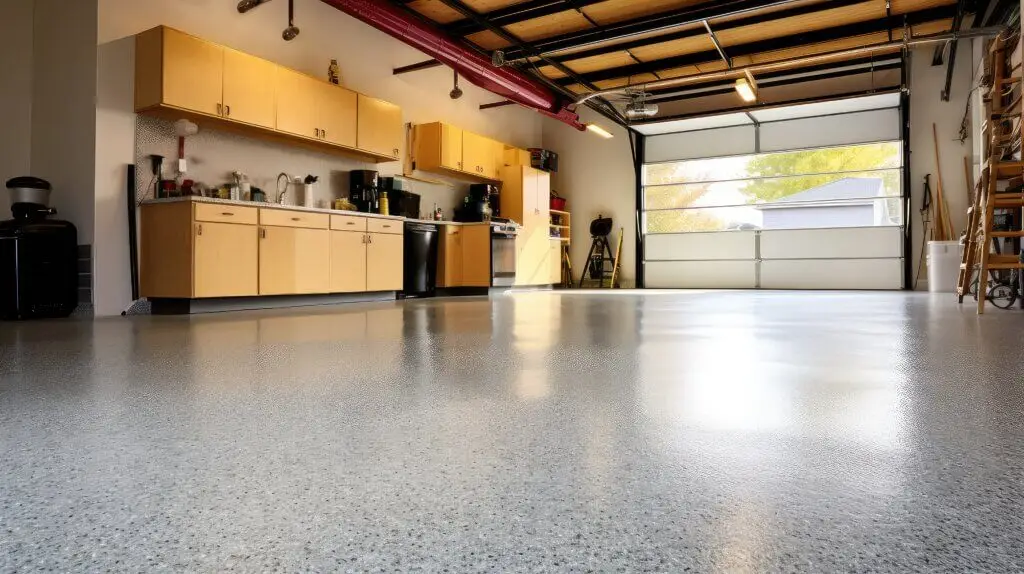
Quick Answer: What Is an Epoxy Flake Floor?
An epoxy flake floor, or “broadcast flake system,” is a multi-layered coating system applied directly over a concrete slab. It provides superior chemical resistance and durability compared to standard floor paint.
How Flake Systems Are Built (Base Coat + Flakes + Topcoat)
The system is constructed through a meticulous process:
- Preparation (Crucial Step): The concrete slab is cleaned, degreased, and mechanically prepared (usually diamond-ground) to ensure optimal adhesion.
- Base Coat: A colored, 100% solid epoxy resin (the primary layer) is applied to the prepared concrete.
- Flake Broadcast: While the base coat is still wet, decorative vinyl or polymer “flakes” (chips) are broadcast, often to the point of refusal (full coverage). These flakes come in various sizes and custom color blends.
- Topcoat: Once the base coat cures and excess flakes are scraped and cleaned, one or two layers of a clear protective topcoat (often Polyaspartic or Polyurethane) are applied to encapsulate the flakes and seal the system.
Why Flakes Improve Hiding + Slip Resistance (And When They Don’t)
- Aesthetics and Hiding Power: The decorative flakes, particularly with full coverage, create a busy, textured look that excels at hiding common concrete imperfections, dust, dirt, and minor wear marks.
- Slip Resistance: The texture provided by the embedded flakes significantly increases the coefficient of friction, providing much better grip than a smooth, glossy epoxy surface. However, the final clear topcoat determines the actual slip resistance. For maximum safety, the contractor should incorporate an anti-slip additive (like fine glass beads or aluminum oxide) into the final topcoat.
Best Places to Use Epoxy Flake Flooring
Epoxy flake flooring is an ideal solution for any area exposed to heavy use, moisture, or chemical spills.
Garages, Basements, Mudrooms, Utility Areas
- Garages: The most common application. It seals the concrete against oil, brake fluid, road salt, and moisture, while creating a clean, showroom look.
- Basements: Protects against moisture vapor transmission (when properly prepped) and offers a durable, mold-resistant floor that is easier to clean than carpet or wood.
- Mudrooms and Utility Areas: These zones benefit from the excellent moisture and abrasion resistance, making cleanup simple after tracking in dirt or snow.
Light Commercial Spaces and High-Traffic Zones
Because of its durability and ease of maintenance, flake epoxy is frequently used in:
- Showrooms and retail floors
- Laundromats and commercial kitchens
- Veterinary offices or kennels
- Any area requiring sanitation and resistance to continuous foot traffic.
Pros and Cons Homeowners Should Know
While highly advantageous, flake epoxy is a technical application with specific sensitivities.
Pros: Durability, Stain Resistance, Easier Cleaning
| Advantage | Description |
| Extreme Durability | Highly resistant to impact, abrasion, and heavy equipment (like vehicles). |
| Chemical & Stain Resistance | Impervious to most common household chemicals, oil, and road salt. |
| Aesthetics | Fully customizable with thousands of color and flake combinations. |
| Seamless & Hygienic | No grout lines or seams, making it hostile to bacteria and mold growth. |
Cons: Surface Prep Sensitivity, Hot-Tire Pickup Risk, Repair Matching
| Disadvantage | Description |
| Hot-Tire Pickup Risk | Low-quality or single-coat epoxy can soften under the heat of car tires, leading to peeling. A high-quality Polyaspartic topcoat is required to prevent this. |
| Sensitivity to Moisture | Epoxy coatings can fail (blister or peel) if applied to concrete with high moisture vapor emission rates. Professional moisture testing is mandatory. |
| Repair Matching | If a section is damaged, matching the exact color/flake density during a repair can be challenging, often requiring an entire section to be recoated. |
Cost Factors (What Changes the Price)
The final cost of an epoxy flake floor depends heavily on the quality of materials and the labor required for preparation.
Typical Cost Ranges for Epoxy Floors and Decorative Flake Systems
- DIY Kits (Not Recommended): $0.75 – $1.50 per sq. ft. (high risk of failure).
- Professional Flake System: Typically ranges from $4.00 to $8.00 per square foot for a full two-to-three-coat system (base, flakes, UV-stable topcoat). Pricing varies based on region and square footage.
Concrete Condition + Moisture Testing + Prep Level (Most Important Factor)
The preparation accounts for up to 80% of the job’s quality:
- Diamond Grinding: Professional grinding (mechanical preparation) is the most critical cost factor and is vastly superior to a cheap acid etch, which is insufficient for long-term adhesion.
- Concrete Repair: Extensive cracks, pitting, or spalling will increase the cost due to the time and material needed for patching and leveling before the coatings are applied.
- Moisture Mitigation: If a moisture test reveals high vapor emission, a specialized moisture-blocking primer must be applied, adding significant cost but preventing guaranteed failure.
Installation & Maintenance Checklist
Ensure your contractor follows these professional standards for a long-lasting floor.
Moisture Test, Crack Repair, Diamond Grinding vs. Acid Etch
- Mandatory Moisture Test: The contractor must perform a Calcium Chloride or RH (Relative Humidity) test to ensure the concrete is dry enough for the coating.
- Surface Prep: Demand diamond grinding. Acid etching does not provide the proper profile (roughness) needed for industrial-grade epoxy to bond chemically.
- Crack Repair: All cracks and joints must be properly filled, typically with a specialized polyurea joint filler, before the base coat is applied.
Recommended Topcoats (UV Stability, Scratch Resistance)
The topcoat is the sacrificial layer that protects the entire system.
- Use Polyaspartic or Polyurethane: These clear coats offer superior UV stability, meaning they will not yellow over time when exposed to sunlight (crucial for garage floors). They also provide much better abrasion and scratch resistance than standard epoxy topcoats.
- Maintenance: Maintenance is simple—sweep or mop with a soft-bristle brush and water. Avoid abrasive cleaners or harsh chemicals like bleach, which can dull the surface over time.
FAQs
How long does an epoxy flake floor last?
A professionally installed, industrial-grade epoxy flake system with a high-quality Polyaspartic topcoat can last 15 to 20 years or more with proper maintenance. DIY kits often fail within 1-3 years.
Is it slippery when wet?
Standard, glossy epoxy can be very slippery. However, a properly installed flake system is less slippery due to the texture of the flakes. For maximum slip resistance, the installer must add an anti-slip aggregate (like aluminum oxide) into the final clear topcoat.
Can you epoxy over old paint or sealer?
No, the old coating must be removed completely. Epoxy must bond directly to the porous, profiled concrete. Attempting to apply new epoxy over existing paint or sealer will result in the new coating bonding to the old, weak layer, leading to guaranteed delamination and failure. The entire floor must be diamond-ground down to bare concrete.
Ready to transform your garage or basement into a durable, functional, and aesthetically pleasing space?
Contact Greater Boston Contractors today for a professional consultation and quote on a custom epoxy flake floor system!