Remodeling a small bathroom (typically 5×8 feet) is one of the best ways to modernize your home and increase its resale value. However, the compact size doesn’t necessarily mean a compact price tag. Due to the dense concentration of critical plumbing, electrical, and ventilation systems, the cost per square foot can often be higher than in a large room.
At Greater Boston Contractors, we provide transparent cost assessments tailored to the specific demands and high standards of the New England market. Here is a comprehensive guide to understanding and budgeting your small bathroom remodel.
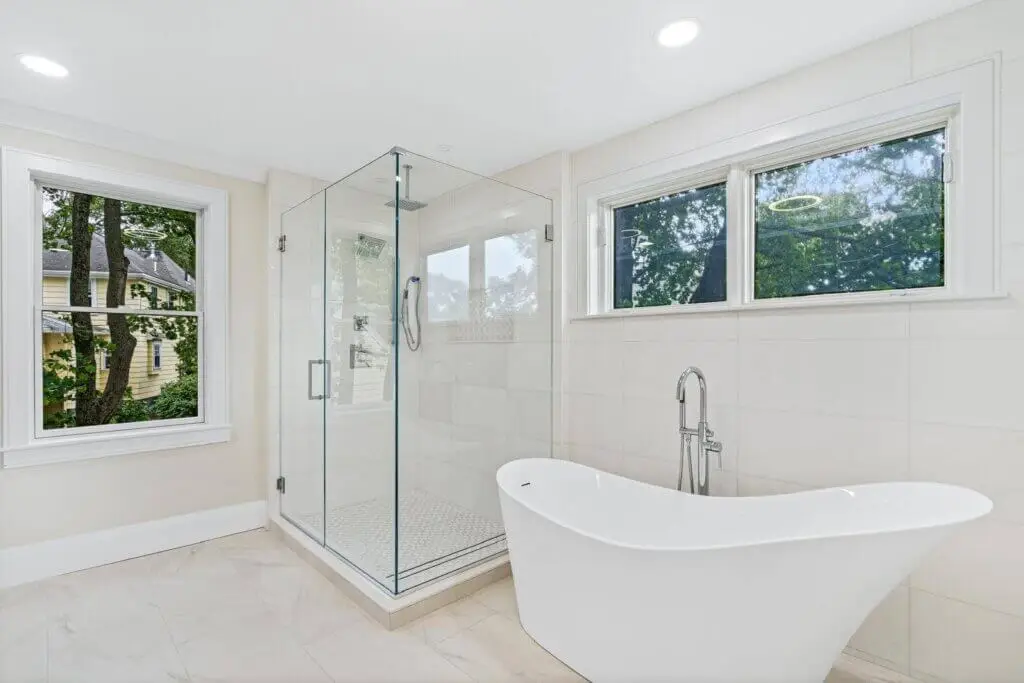
Average Cost to Remodel a Small Bathroom
The price range for a small bathroom remodel is wide, dictated by the quality of materials and the extent of structural changes.
Typical Range for 5×8 Bathrooms
Nationally, a standard 5×8 bathroom remodel typically costs between $15,000 and $25,000. Given the higher labor costs and materials often required in the Greater Boston area, homeowners should generally budget for the higher end of this range, or slightly above, for a professional, durable finish.
Low-End vs. High-End Remodel Budgets
- Low-End Refresh ($8,000–$15,000): This budget allows for cosmetic work: new paint, fixtures, light-mid-range vanity, and keeping the existing tub/shower surround and plumbing layout.
- High-End or Full Gut ($25,000+): This involves a complete tear-out, new plumbing and electrical lines, custom tile work (floor and shower), high-end fixtures (rain head, heated floors), and potentially reconfiguring the shower or vanity placement.
Factors That Influence the Price
Contractors assess several key factors to determine the final cost of your project.
Labor and Materials
In the Boston area, skilled labor rates are high. Approximately 40% to 60% of your total budget will go toward the professional installation labor, demolition, and carpentry required to ensure the work meets local codes and standards.
Plumbing and Electrical Updates
If you change the layout of the toilet, sink, or shower, or if your home is older, the cost increases significantly. Moving the water supply, drain lines, or venting requires complex work behind the walls. Similarly, updating wiring for GFCI outlets and modern lighting adds cost.
Tile Type and Flooring Choices
The material you choose and how complex its installation is plays a major role:
- Simple: Large-format ceramic or porcelain tile is quicker and cheaper to install.
- Complex: Small mosaic tiles, complex patterns (like herringbone), or natural stone (marble, slate) require significantly more labor, sealing, and material cost.
Vanity and Fixture Upgrades
Choosing a floating vanity with a quartz top will be more expensive than a basic pre-fabricated cabinet. High-end fixtures, such as wall-mounted faucets, linear drains, or custom glass shower doors, all drive up the cost compared to standard chrome fixtures and shower curtains.
Cost Breakdown: What Homeowners Spend Most On
In a full-scale remodel, these items generally consume the largest portions of the budget:
Tile Installation
Tile work, including waterproofing, laying the tile on the floor and in the shower surround, and grouting, is one of the most labor-intensive aspects of the project. A quality tile installation ensures durability against moisture.
Shower/Tub Replacement
Replacing an existing tub with a custom tiled walk-in shower is expensive. This involves constructing a new shower pan, waterproofing the walls (essential in the Northeast to prevent mold), and installing the glass door.
Lighting and Ventilation Upgrades
Modern code requires specific ventilation (high-CFM fans, often with humidity sensors) to protect the structure from moisture. Upgrading to specialized bath lighting (like task lighting at the vanity and ambient lighting in the shower) also contributes to the electrical budget.
Ways to Save on a Small Bathroom Remodel
If you need to keep costs contained, focus on these strategic choices.
Retain Existing Layout
This is the single most effective way to save money. By keeping the toilet, sink, and shower/tub in their current locations, you drastically reduce the costly labor involved in moving plumbing rough-ins.
Use Prefabricated Shower Units
Instead of expensive custom tile, choose a high-quality, pre-fabricated acrylic or fiberglass shower surround and base. While less customizable, these are fast to install, waterproof, and dramatically lower labor costs.
Choose Mid-Range Materials
Opt for high-quality, mid-range porcelain or ceramic tiles instead of natural stone. Select a solid, ready-made vanity with an integrated sink rather than custom cabinetry and a separate countertop. Focus on function over exotic aesthetics.
FAQs
“Is it cheaper to remodel a small bathroom?”
It is cheaper in total than remodeling a large master bathroom. However, on a per-square-foot basis, small bathrooms are often more expensive due to the high density of essential utilities (plumbing and electrical) that must all be worked on within a tight space.
“How long does a small bathroom remodel take?”
For a full gut and replace, a small bathroom remodel typically takes between two to four weeks. This includes demolition, plumbing rough-in, tiling, grout curing time, and final fixture installation.
“Does remodeling a bathroom increase home value?”
Yes. Bathroom remodels offer one of the best returns on investment (ROI) in home renovation, often recouping 60-70% of the cost at resale. A modern, clean, and functional bathroom is a top selling point for buyers.
Ready to get a precise estimate for your small bathroom project?
Contact Greater Boston Contractors today for a detailed, no-surprise quote and expert guidance on your remodel.