When it comes to choosing a garage floor coating, the “best” option isn’t one-size-fits-all. It depends on your specific needs, budget, and the local climate. A garage in a mild, dry climate has very different needs than one in a region with freezing temperatures, road salt, and high humidity. This guide will help you define what “best” means for you by comparing the most popular professional-grade coatings.
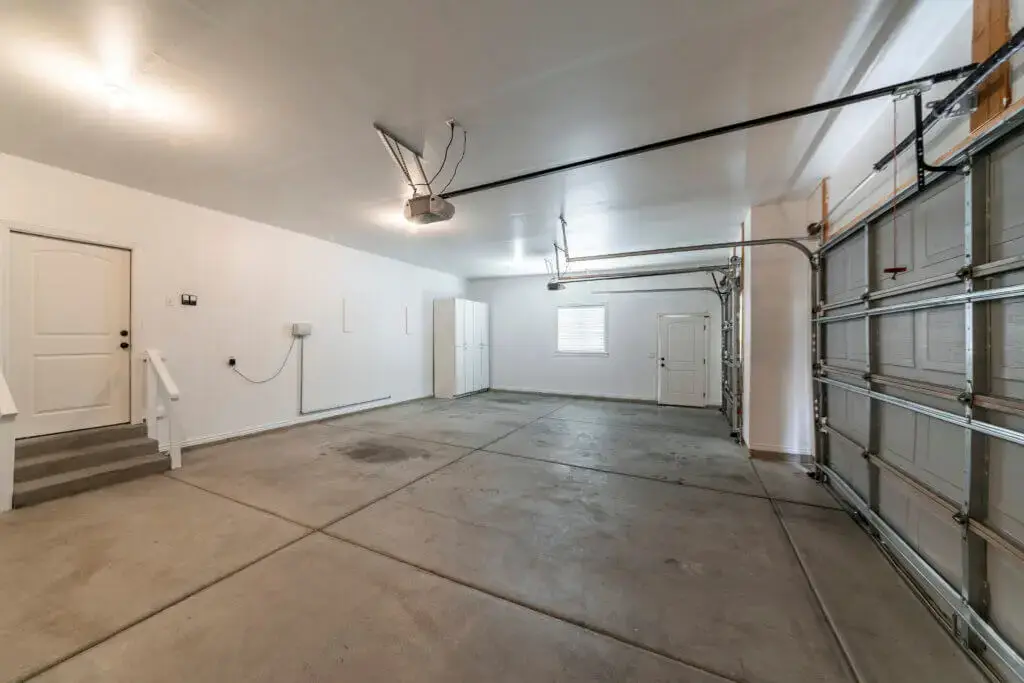
Define “Best” for Your Garage
Before you can choose the right coating, you need to assess how you use your garage. This will determine the level of durability and protection you need.
Heavy Traffic vs. Weekend Use
- Heavy Traffic: If your garage is used for daily parking of multiple vehicles, a workspace for DIY projects, or as a home gym, you need a coating that can withstand constant wear and tear, impacts, and heavy loads.
- Weekend Use: If your garage is primarily for storage or a single vehicle used on weekends, you may not require the highest level of abrasion resistance, which could allow for a less expensive option.
Salt, Chemicals, and Sunlight Exposure
Consider what your floor will be exposed to. A quality coating should be resistant to gasoline, oil, and harsh chemicals. If you live in a climate where road salt is used, your coating must be salt-resistant to prevent damage. If your garage gets a lot of direct sunlight from a south-facing door, UV stability becomes a major factor.
Head-to-Head Comparison
The two top contenders for professional-grade garage floor coatings are epoxy and polyurea/polyaspartic. While both offer a durable, attractive finish, they have key differences.
Epoxy vs. Polyurea/Polyaspartic
- Epoxy is a hard, rigid coating that bonds well to concrete. It’s tough but can be brittle and may chip under heavy impact. It also has a longer cure time.
- Polyurea/Polyaspartic is a more flexible and elastic coating. It’s more resistant to chipping and cracking from impacts and temperature changes. Its main advantage is its lightning-fast cure time.
Prep Needs, Cure Time, and Warranties
| Feature | Epoxy System | Polyurea/Polyaspartic System |
| Prep Needs | Meticulous grinding and moisture-free surface. | Same meticulous prep, but can be applied in more humid conditions. |
| Cure Time | 2-3 days for vehicle traffic. | 1 day for vehicle traffic. |
| UV Stability | Can yellow or chalk with prolonged sun exposure. | Highly resistant to UV rays; will not yellow. |
| Flexibility | Rigid; can crack with concrete movement. | Flexible; highly resistant to chipping and cracking. |
| Warranties | Typically 1-5 years, depending on the product. | Often comes with longer warranties, sometimes 10-15 years. |
Cost vs. Performance
When evaluating cost, look beyond the initial price tag. The most expensive option upfront may save you money in the long run by outperforming a cheaper solution.
Upfront vs. Lifecycle Costs
A DIY kit may seem like a bargain, but if it peels after a year, you’ve wasted your time and money. A professional-grade polyaspartic system, while more expensive initially, can last for decades with minimal maintenance. This makes its lifecycle cost significantly lower than having to replace a cheaper coating every few years.
Professional vs. DIY Trade-Offs
DIY kits typically use water-based epoxy, which is thin and less durable. Professional contractors use industrial-grade, two-part systems that require specialized equipment and expertise for proper application. The biggest trade-off is the quality of the prep work. Professional grinding is critical for a strong bond and is almost impossible to replicate with a DIY approach.
Our Recommendation by Scenario
Daily Parking & Winter Roads
For a garage with daily use in a cold climate where you bring in snow, ice, and road salt, a polyurea/polyaspartic system is the undisputed “best” choice. Its resistance to UV, chemicals, and temperature-related cracking provides the ultimate protection.
Showroom Finish vs. Budget Refresh
If you’re after a high-gloss, showroom-quality finish that will last, a full-flake polyaspartic or an epoxy/polyaspartic hybrid system is the way to go. If you are on a very tight budget and simply need a light refresh for an outdoor patio or a very low-traffic area, a simple acrylic sealer can suffice, but it is not a recommended long-term solution for a garage.
FAQs
Will It Peel?
Peeling is almost always a result of poor surface preparation. If the concrete isn’t properly ground, cleaned, and primed, the coating won’t adhere correctly and will eventually peel, regardless of the quality of the product.
How Slippery Is It When Wet?
Most professional coatings, especially those with flakes, are not slippery when wet. The broadcast flakes or anti-slip additives create a textured surface that provides excellent traction. A slick, high-gloss surface can be slippery, but a good contractor will always recommend adding a non-slip agent.
Still not sure which is right for you? Contact Greater Boston Contractors for a free, no-obligation consultation to discuss your needs and get a custom recommendation.