Creating a dedicated space for yoga at home doesn’t require a large room. With smart design and a mindful approach, you can transform even a small area into a peaceful sanctuary for your daily practice. This guide provides ideas to help you craft a space that supports your physical and mental well-being.
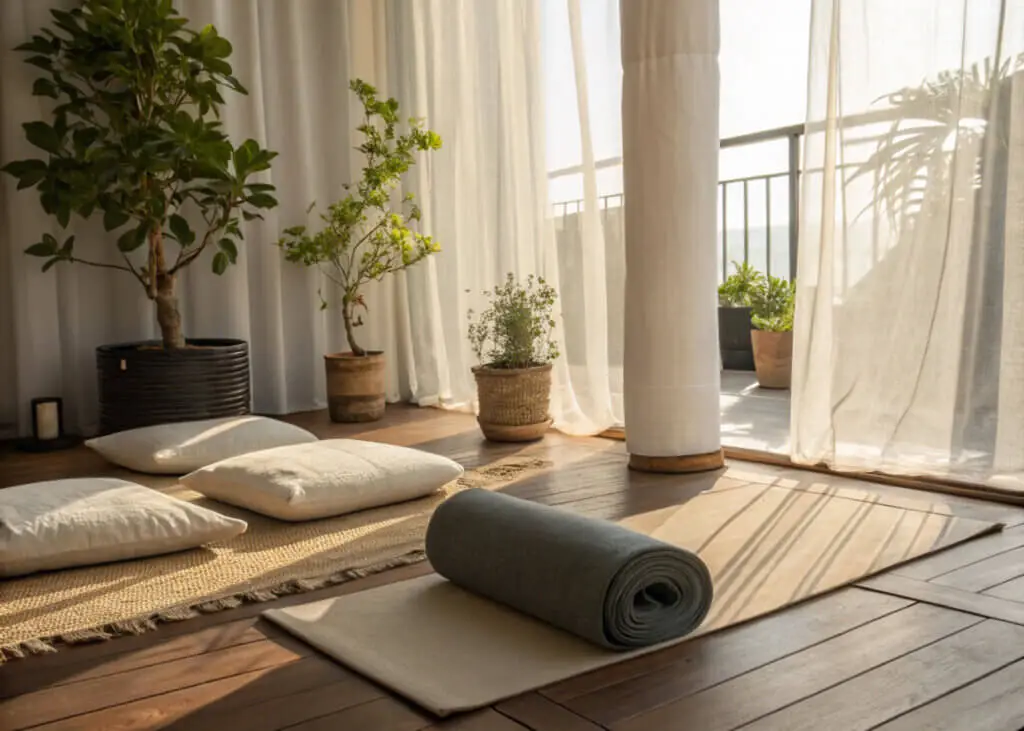
Finding the Right Spot at Home
Corner Conversions vs. Spare Closets
A dedicated yoga corner can be as simple as an unused space in your living room or bedroom. For more privacy, consider converting a spare closet or a large pantry by removing the door and adding calming elements. The most important thing is to choose a spot where you feel comfortable and can focus without distractions.
Noise, Privacy, and Airflow
To enhance your practice, select a location that is as quiet as possible. Consider using a room divider or a curtain to create a sense of privacy. Good airflow is also essential, so a space with a window is a great option.
Floor, Lighting, & Wall Finishes
Non-Slip, Low-Impact Flooring Options
While a yoga mat is your primary surface, the flooring underneath it matters. Cork and bamboo are excellent choices as they are natural, sustainable, and offer a comfortable, low-impact surface. If you have hardwood or tile, a large rug can provide extra cushioning.
Natural Light, Dimmers and Warm Lamps
Natural light can be incredibly uplifting. If possible, choose a spot with a window. For evening practice, use a dimmer switch or warm-toned lamps to create a soft, inviting glow. Avoid harsh overhead lighting that can disrupt your sense of calm.
Calm Paint Colors and Mirrors
Opt for paint colors that evoke a sense of peace, such as sage green, soft blues, or warm neutrals. Adding a mirror can not only make the space feel larger, but also help you check your alignment during poses.
Smart Storage & Minimal Equipment
Foldable Mats, Blocks, Straps
Keep your space clutter-free by using equipment that can be easily stored. Choose a foldable yoga mat, and use stackable blocks and straps that can be tucked away in a decorative basket or bin.
Floating Shelves and Baskets
Vertical storage is your best friend in a small space. Install floating shelves to hold essential oils, small plants, or inspirational items. Woven baskets on the floor can be used to store blankets and towels.
Décor That Supports Mindfulness
Plants, Scents, and Sound Control
Incorporate elements that engage your senses. Add a small plant to purify the air and connect you with nature. Use an essential oil diffuser with scents like lavender or eucalyptus for a calming aroma. Consider a small water fountain or a Bluetooth speaker for soothing sounds or guided practices.
Tech-Free vs. Guided Practice Setup
Decide if you want your space to be a completely tech-free zone for meditation and personal practice, or if you need a spot for a tablet or phone to follow along with online classes. Plan your setup accordingly to support your preferred style of practice.
Budget & DIY Tips
Reusing Materials
You can create a beautiful space without a high budget. Use old wood planks for floating shelves, repurpose a small stool as an altar, or use a vintage scarf as a wall tapestry.
Weekend Mini-Renovations
This project can be a fun weekend activity. Focus on a single element at a time—like painting the walls or installing a shelf—to make it a manageable and enjoyable process.
FAQs
What’s the minimum space I need?
You really only need enough room for your mat and a little extra space on all sides to extend your arms and legs. A 6’x6′ area is generally sufficient for most practices.
Do I need special yoga flooring?
No, you don’t. While specific flooring types can be a nice addition, a good quality yoga mat is all you need to protect your joints and provide grip.
I hope these ideas help you create the perfect home yoga room! If you’re considering a more extensive renovation, contact Greater Boston Contractors to bring your vision to life.